Little incentive to grow pulses: Poorer economics versus competing crops

Rising imports, shrinking acreage, and low profitability show why another mission may struggle unless pulses farming becomes economically viable for growers
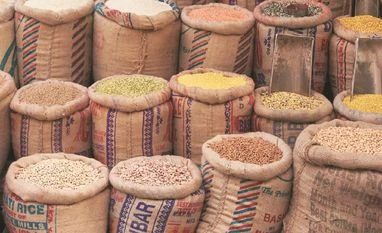
pulses
What is being disregarded in all the bids is that the cultivation of pulses is not as lucrative as that of competing food or cash crops
Surinder Sud
5 min read Last Updated : Nov 23 2025 | 11:59 PM IST
Self-sufficiency in pulses, the major source of protein for most Indians, has been the much-cherished, yet consistently elusive, goal for decades. The dependence on imports to meet the requirements of pulses has, in fact, tended to accentuate despite ceaseless endeavour to bridge, or at least reduce, the demand-supply gap. Even in the recent years, import has risen from 2.6 million tonnes in 2020-21 to 4.7 million tonnes in 2023-24. In 2024-25, shipment from abroad is estimated to have surged exorbitantly to a record 7 million tonnes. 
 Systematic efforts to attain aatmanirbharta (self-reliance) in these nutritious legumes had begun way back in 1966 with the launching of the all-India coordinated research project on pulses, and are still ongoing without making the requisite headway. The overall output of pulses has, no doubt, witnessed some uptick of late, but the extent of increase has not been able to match the fast-growing demand. As a result, per capita availability has declined from 54.4 gm per head per day in 2017 to 43.6 gm now. This is around half the needed intake of 85 gm per day, as recommended by the National Institute of Nutrition. 
This, indeed, is cause for concern, given that a sizable section of the Indian population is compulsively vegetarian, or only an occasional consumer of non-vegetarian food. Adequate consumption of pulses is imperative also because of their abundant content of dietary fibre and vital vitamins and minerals, such as iron and folate. Paucity of these nutrients is the major cause of rampant malnutrition, with far-reaching repercussions in terms of the health and productivity of Indians. 
Of the numerous programmes undertaken over the past half a century to lift pulses output, the most significant ones included the Pulses Development Scheme (1969-74); the Food Grain Production Programme on Pulses (1985-90); the Technology Mission on Pulses, Oilseeds and Maize (1990s); the Integrated Scheme on Oilseeds, Pulses and Maize (2004-10); the National Food Security Mission for Pulses – later renamed as the National Food Security and Nutrition Mission – (2007-12); and the Accelerated Pulses Production Programme (2010-14). 
However, most of these programmes followed virtually similar strategies, with minor tweaking of action plans. Hardly any fresh, or out-of-the-box, thinking went into their formulation. Unsurprisingly, therefore, they could not deliver the desired results. This is borne out by the lack of any significant expansion in acreage under these crops or any perceptible upsurge in their average productivity. On the contrary, the net area under pulses cultivation has shrunk from the peak of 31 million hectares in 2021-22 to 27.5 million hectares in 2024-25. Production, too, has plunged from 27.3 million tonnes to 25.2 million tonnes during this period. The average yield of pulses is merely 0.74 tonnes per hectare, which is below the global average of 0.97 tonnes, though India is the world’s largest producer and consumer of these legumes. Long-term growth in output has, in fact, remained dismally meagre, just 0.5 per cent per annum since the 1950s. Improvement in the growth rate witnessed since 2004-05 is attributable largely to the surge in the production of just three crops — green gram (mung), black bean (urad), and chickpea (gram). The other pulses are yet to record any appreciable growth in productivity or production. 
The latest move to ramp up the pulses sector is the ₹11,440 crore Mission for Aatmanirbharta in Pulses (Dalhan Aatmanirbharta Mission), formally launched by Prime Minister Narendra Modi on October 11. This initiative, to be implemented from 2025-26 to 2030-31, was announced in this year’s Budget speech, and aims to achieve its primary objective of aatmanirbharta by December 2027 by focusing on boosting the output of three key pulses — tur (arhar), urad (black bean), and masoor (lentil). The followup action is proposed to linger for a few more years. However, the growth model to be followed by this mission, too, does not seem much different from what has been tried out in some of the previous schemes. It basically revolves round trying to increase the acreage under pulses by encouraging mixed farming with other crops and utilising rice-fallows (land kept vacant after harvesting kharif paddy), distributing kits containing seeds of high-yielding crop varieties, and offering assured marketing of the produce at pre-fixed prices (minimum support prices). Prima facie, hardly any innovative move has been envisaged for this scheme. Most of the mooted measures have already been tried and tested with little gain.  
What is being disregarded in all the bids is that the cultivation of pulses is not as lucrative as that of competing food or cash crops. Farmers, therefore, have little incentive to invest in yield-boosting inputs. Also, for the same reason, the pulses crops have been pushed to the marginal, unirrigated, and less fertile lands. Unless the economics of pulses farming, vis-a-vis other crops, is taken care of, expecting a sustainable upswing in production is pointless.
 
surinder.sud@gmail.com
 

One subscription. Two world-class reads.

Already subscribed? Log in

Subscribe to read the full story →
*Subscribe to Business Standard digital and get complimentary access to The New York Times

Smart Quarterly

₹900

3 Months

₹300/Month

SAVE 25%

Smart Essential

₹2,700

1 Year

₹225/Month

SAVE 46%
*Complimentary New York Times access for the 2nd year will be given after 12 months

Super Saver

₹3,900

2 Years

₹162/Month

Subscribe

Renews automatically, cancel anytime

Here’s what’s included in our digital subscription plans

Exclusive premium stories online

  • Over 30 premium stories daily, handpicked by our editors

Complimentary Access to The New York Times

  • News, Games, Cooking, Audio, Wirecutter & The Athletic

Business Standard Epaper

  • Digital replica of our daily newspaper — with options to read, save, and share

Curated Newsletters

  • Insights on markets, finance, politics, tech, and more delivered to your inbox

Market Analysis & Investment Insights

  • In-depth market analysis & insights with access to The Smart Investor

Archives

  • Repository of articles and publications dating back to 1997

Ad-free Reading

  • Uninterrupted reading experience with no advertisements

Seamless Access Across All Devices

  • Access Business Standard across devices — mobile, tablet, or PC, via web or app

Topics :BS OpinionpulsesIndian Economy

Next Story


