The cruelest threat in the life of a commentator is that all of one’s writing is available for scrutiny and fact-checks for eternity. You may get away with an error of fact, interpretation or, God forbid, a prediction for now, but it comes back to haunt you at some point. The arrival of Google has made it much, much worse. So, Shekhar Gupta, in your 1983 India Today cover story on Sunil Gavaskar you said his son Rohan was named after the West Indian idol Rohan Kanhai, and bats left-handed like him? Of course, guilty as charged, with the crime of not knowing Rohan Kanhai was right-handed.
That’s why when you think you’ve been proven right, you should claim vindication. Not always or even often, but when it’s something counterintuitive that drew widespread criticism and scepticism, even ridicule, when you first wrote it. As I did with a National Interest on November 21, 2011, headlined “Leave Af to Pak.” As a semi-war breaks out on the Pakistan-Afghanistan border involving jets, drones and artillery, it’s my time to say, I told you so 15 years ago.
How can you leave Afghanistan to Pakistan? We should be there in strength, even by way of an arrangement with the Americans or the regime they leave behind, as a sizable threat to Pakistan’s rear. Of course, it’s India’s opportunity, and you are saying leave Af to Pak? These were some of the responses then. The angriest criticism, as you’d expect, came from the Ministry of External Affairs (MEA) and military veterans who want to be fighting the Pakistanis 24x7x365xeternity, and never mind the geography. I will summarise the criticism as follows:
> When the Americans leave, Pakistan will turn Afghanistan into its vassal state.
> Even if they don’t colonise Afghanistan, they will have a puppet government, fulfilling their fantasy of strategic depth. Pakistan’s narrow geography and the lack of depth (as exposed once again during Operation Sindoor) has been a chronic bugbear with Pakistani strategists.
> Pakistan will draw trained and battle-hardened Taliban/Mujahid groups into its Lashkars and unleash them on India.
The answers to all of these, 15 years ago, were simple. One, that three of the Great Powers tried subduing Afghanistan at the peak of their power and were defeated: Britain in the mid-19th century, Soviet Union from 1979 onwards, the US following 9/11 in 2001. If the Pakistanis really think they are hotter than all of them, we should say, go ahead, and order popcorn.
Second, that simple geography, the Hindu Kush and the great, cold emptiness across it makes strategic depth the fantasy of an idiot, and I am being kind with that description.
And third, with 25 years of insurgency in Kashmir (then), and a record of 40 years now, we know that Afghans have never joined the Pakistani Lashkars in Kashmir. Almost all foreign terrorists are of exactly the same ethnic stock as the Pakistani army, Muslim Punjabis.
Now see where we stand. The Pakistanis are carrying out deep bombing raids inside Afghanistan and mostly killing civilians. At one, it was 18 members of the same family. This terrain and demography makes precision bombing fanciful and risk-prone even for the greatest military power human history has seen: America since the beginning of this millennium.
With all of their satellites, human and signal intelligence, drones and precision weapons, they often killed civilians in mosques, large clan compounds or simply kept gutting empty caves. They did often kill a commander or two, but there was always collateral damage. Each such attack only swelled the ranks of the Taliban as men of the affected clans swore revenge.
If the Pakistanis think they can do better than the Americans, an Indian partisan can again say, go ahead, make my day. Nobody wants to rejoice over any human misery. Particularly when the Afghans, irrespective of the regime in power, have always had affection for India and Indians. The last thing we want to see is any Afghans, especially civilians, getting hurt. But the fact is, with their arrogance and shortsightedness, Pakistan has opened up a second front for themselves.
India, therefore, isn’t the only country in the subcontinent that has to worry about a two-front threat. Of course, there are differences. Afghanistan can’t be to Pakistan what China is to India, despite territorial disputes between them. There is no Taliban-India alliance unlike China-Pakistan. And finally, India and Afghanistan, at least in the existing territorial reality (as different from cartographic fact) are far apart with wide Pakistani or Pakistan-controlled territory between them. If at all India can be accused of launching proxy war on Pakistan, it might be with patronage to the brilliant Afghan cricket team.
The Pakistani strategic posture and military planning, however, were never designed for a two-front situation, least of all for the mess in which they’ve landed themselves now. They’re at war with a nation, if anything even more Islamic and puritan Sunni than them, killing and getting killed during the holy month of Ramzan.
The Pakistani political leadership is weak and devoid of any intellect. Its diplomacy is entirely India-China-US focused and suffers from a presumptive view of Afghanistan as a vassal. The military is short of ideas. If all is a bloody mess on the western front, they blame it on the eastern neighbour India. Their own militant groups they’ve named in religious epithets.
For Tehrik-e-Taliban Pakistan (TTP) it’s Fitna al-Khawarij. Fitna (discord, revolt) comes from Islamic history where the First Fitna was fought between 656 and 661 AD resulting in the replacement of the Rashidun Caliphate by the Umayyad Caliphate.
There was, however, a third group in that war, the Islamic extremists or a kind of religious renegades who would submit to no prophet. They were described as Khawarij. That religious imagery is invoked by the Pakistan Army/ISI for the TTP. Otherwise how do you rouse your own Islamic army to fight a group whose main demand is the imposition of Shariah rule in all of Pakistan?
From the same history they draw their propaganda name for the Baloch insurgents: Fitna-al-Hind (mischief/subversion from India), insinuating that it is entirely an Indian-run operation. This again fails the test of geography and demography. The Baloch are native not just of Balochistan, but also adjoining, vastly empty zones of Iran and Afghanistan. India cannot have any access there at scale. Of course some in Indian “agencies” may see these Pakistani allegations as a compliment. But Pakistanis know their 3,549-km western borders with Afghanistan and Iran are now a live challenge. And then, what if Donald Trump decides to strike Iran?
For decades, the Pakistani establishment has nursed multiple fantasies looking west. One, strategic depth in Afghanistan. Two, an unshakeable Islamic ally in Iran and then, the touching notion that they belong culturally and religiously in West Asia, more specifically the Arab Middle East. This was their escape from the subcontinental identity. Mostly because India is so dominant that cultural, linguistic and family linkages make the subcontinental identity a synonym for being Indian.
Postscript: Since I started this with the perils of a commentator’s life, making geopolitical calls is riskier than domestic politics. The fourth anniversary this week of the Russian invasion of Ukraine is a good time to own up to one such. The National Interest published on Saturday (February 26, 2022) had said rather too sweepingly that by the time you are reading this, the Russians would already be in Kiev or they might be there in a couple more days. Not only were they pushed back rudely, but they have also been engaged in a grinding war of attrition for four years since.

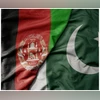 "When Af is left to Pak: A weak leadership and a muddled foreign policy")












 Connect with us on WhatsApp