Two developments in the recent Canadian elections offer hope for a thaw in Indo-Canadian relations, which have been in the deep freeze since mid-2023. The first is the victory of the Liberal Party, under former central banker and economist Mark Carney, who replaced Justin Trudeau as Prime Minister in mid-March. The second is the resounding defeat of the Liberal Party’s India-baiting parliamentary ally Jagmeet Singh and his New Democratic Party (NDP), which came in a distant fourth. Mr Carney, who steered the Bank of England as governor through Brexit between 2013 and 2020, is known to be a pragmatist. In an interview on Monday, he deployed temperate language in his references to India, describing relations as “incredibly important” and speaking of the importance of deep ties between the two countries “economically and strategically”.
This is a notable shift in the combative tone of his predecessor, leading to deterioration in India-Canada relations following allegations of Indian involvement in the assassination on Canadian soil of Hardeep Singh Nijjar, whom India had designated a terrorist. In September 2023, Canada unexpectedly paused trade negotiations and indefinitely postponed a trade-mission visit. This was followed by tit-for-tat diplomatic expulsions and a suspension of visa operations over the following year. Among the main casualties were Indian student enrolments in Canadian universities, which dropped precipitously from 233,500 in 2023 to 137,600 in 2024. Mr Carney’s statement on the Nijjar controversy has been carefully crafted. Though he specified that Canada did not cause strains in relations, he sees “a path forward to address those with mutual respect and to build out”.
The Liberal Party’s narrow victory with 154 seats in a 343-seat Parliament (at press time) means that negotiations must begin for support from outside, which effectively means opening talks with the separatist Bloc Quebecois with 21 seats, since the NDP (with four seats) and Greens (one) fall below the threshold of 12 seats to qualify as national parties. Pierre Poilievre, leader of the Conservative Party, with 131 seats, and of the official Opposition, has resolved to hold the ruling party to account. This poses little risks to Indo-Canadian relations since Canadians of Indian origin, especially those who are anti-Khalistani and led caucuses supporting Prime Minister Narendra Modi in 2014, have been major supporters of this right-wing party and are unlikely to oppose Mr Carney’s overtures to India.
When set against American President Donald Trump’s tariff wars, Mr Carney’s focus on trade diversification and economic diplomacy, in which he mentions India as a key partner, is being optimistically viewed in New Delhi. India is inching closer to a trade agreement with the United States (US), but Mr Carney has chosen a more assertive stance on US tariffs on Canadian goods (excluding auto and energy), which is seen as a key factor in his victory. But the unpredictable nature of the Trump trade wars — with its selective exemptions and erratic postponements — underlines for both India and Canada the urgent need for sustainable trade diversification. The resumption of trade negotiations as precursor to a full-fledged free-trade agreement that would facilitate better market access by lowering trade barriers would be mutually beneficial in broadening India’s export markets and enhancing Canada’s Indo-Pacific strategy. After a stormy year and a half, hopes for a reset have brightened.

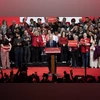 "Hopes for a reset: Carney victory signals improvement in Indo-Canadian ties")











