The latest National Family Health Survey (NFHS)-6 2023-24 findings suggest that women’s economic inclusion in India is improving, but empowerment remains uneven. Land ownership among women, either alone or jointly with others, has increased from 14 per cent in NFHS-5 (2019-21) to 18.8 per cent in NFHS-6 (2023-24). Internet use among women has nearly doubled from 33 per cent to 64 per cent, and 89 per cent of women now operate their own bank accounts, up from 79 per cent. The proportion of women who worked in the last 12 months and earned cash income has also risen from 25 per cent to 31 per cent. These gains reflect the impact of digitisation, financial-inclusion initiatives, and welfare programmes targeting women.
However, important gaps remain. The rise in women’s ownership in land and housing is welcome, but much of this ownership is likely to be joint rather than independent. A 2022 working-paper by the National Council of Applied Economic Research (NCAER) found that women rarely owned land solely in their own name and were more commonly listed as joint owners. The study also showed that even when women possessed land titles, the area of land they held was typically smaller than that owned by men, and women with individual titles tended to own relatively small parcels. Without a stronger enforcement of inheritance rights and greater awareness of legal entitlements, asset ownership may remain more symbolic than transformative.
The increase in women earning cash income also deserves closer scrutiny. A larger number of women are participating in economic activities, but the quality of employment remains a concern. According to the Economic Survey 2025-26, women account for more than 54 per cent of all workers registered on the e-Shram portal for unorganised labour. As the Periodic Labour Force Survey Annual Report 2025 shows, the female labour force participation rate stands at 40 per cent. Yet a substantial proportion of working women continues to be concentrated in informal and low-productivity employment with limited access to social security, employment benefits, and income security.
The expansion of financial inclusion, reflected in the growing share of women operating their own bank accounts, underscores the impact of initiatives such as the Pradhan Mantri Jan Dhan Yojana and the growing use of direct-benefit transfers. Access to bank accounts has improved women’s ability to receive welfare payments, save independently, and participate in the formal financial system. However, account ownership alone does not guarantee financial empowerment. Despite substantial progress in financial inclusion, nearly two-thirds of credit-eligible women remained outside the formal credit system.
The next phase of reform must, therefore, focus on strengthening women’s property rights, expanding opportunities in formal employment, improving access to productive credit, and supporting women-led enterprises. Investment in childcare facilities, skills development, and workplace flexibility can further reduce barriers to employment participation. India has made meaningful progress in bringing women into the economic mainstream. The focus now should be to ensure that inclusion evolves into genuine empowerment.

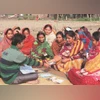 "Improving economic inclusion: Access should enable empowerment of women")












 Connect with us on WhatsApp