The newly appointed United States (US) ambassador to India, Sergio Gor, has said that India will soon be invited to join Pax Silica. Launched in December last year, Pax Silica is a US-led strategic bloc aimed at securing resilient supply chains for silicon, semiconductors, artificial intelligence (AI) infrastructure, and critical minerals. With founding members including Japan, South Korea, the United Kingdom (UK), Israel, and Singapore, and the recent additions of Qatar and the United Arab Emirates (UAE) this month, the initiative extends beyond chipmaking to include trusted access to energy, capital, and financing for advanced technologies, reflecting Washington’s broader effort to diversify dependencies away from China. For India, the attraction is clear. The pandemic and subsequent trade disruption exposed the risks of over-reliance on a single supplier. China’s recent restrictions on rare-earth exports have affected Indian automobile and electronics manufacturers, underlining these vulnerabilities. Despite having an estimated 8.5 million tonnes of rare-earth reserves, India still imports about 93 per cent of its requirements from China. India’s rare-earth production accounts for less than 1 per cent of global output even as it holds one of the world’s largest reserve bases.
The bloc brings together complementary strengths. The US and Japan can provide technological leverage while South Korea dominates chip manufacturing. The Netherlands anchors advanced lithography, and Australia supplies critical inputs such as lithium and rare earths. The UK, Israel, and Singapore add depth in AI software and cybersecurity while recent entrants Qatar and the UAE contribute deep pools of sovereign capital to finance AI systems. India is also laying the foundations of a semiconductor ecosystem. Under the India Semiconductor Mission, the government has approved 10 projects with investment worth ₹1.6 trillion, supported by incentives of around ₹76,000 crore. These include fabrication units, compound semiconductor plants, and 23 chip-design projects aimed at building local capabilities. Global firms such as Micron have announced investment while Indian companies, including the Tata group, are entering chip manufacturing.
These efforts, though still at an early stage, align well with Pax Silica’s objectives of building trusted and diversified supply chains. India’s value proposition is not limited to manufacturing. Its digital public infrastructure, large domestic market, and rapidly expanding AI ecosystem give it scale that many existing members lack. Tighter US visa regimes could push many highly trained Indian engineers back home, potentially boosting the domestic AI and semiconductor industries if the ecosystem can absorb them productively. India would also be the first developing economy in the bloc. The larger challenge lies in converting geopolitical alignment into real industrial capability. Semiconductor fabrication and rare-earth processing require large capital, a stable power supply, water resources, and strong environmental safeguards. Membership in Pax Silica can provide access to technology, finance, and markets, but it cannot substitute for domestic reforms, faster project execution, and regulatory clarity. As global supply chains gradually bifurcate between China-led and Pax Silica-led systems, India will need to navigate expectations carefully by protecting its industries through calibrated support while remaining compatible with the bloc’s rules and norms. Strategic alignment may open the door, but sustained competitiveness will ultimately depend on execution at home.

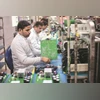 "Strategic alliance: Pax Silica can reshape global tech supply chain")











