India’s Department of Telecommunications (DoT) has held informal consultations with companies such as Apple and Google to assess the feasibility of enabling satellite connectivity directly on smartphones, according to an Economic Times report.
Both companies are understood to have flagged two broad concerns: limitations in current smartphone hardware and the need to align India’s regulations with global standards rather than build India-specific implementations.
What D2D actually means
At a basic level, direct-to-device (D2D) refers to smartphones connecting directly to satellites, bypassing terrestrial mobile towers. The idea is to extend connectivity to areas where traditional networks are unavailable, such as remote regions or disaster zones.
However, this is not simply an extension of existing 4G or 5G networks. Unlike terrestrial networks, where base stations are relatively close to devices, satellite communication involves significantly longer distances, weaker signal strength, and different spectrum characteristics. This changes how devices need to transmit and receive signals.
More importantly, D2D, in its full form, is not limited to emergency communication. It is being envisioned as a system capable of supporting voice, messaging, and potentially data services over satellite links. That puts it much closer to a telecom network than a niche feature.
The key regulatory distinction: SOS vs full D2D
A major part of the current debate in India is not about whether satellite communication should be enabled, but about how different types of satellite services should be classified.
Submissions to the Telecom Regulatory Authority of India (TRAI), including one by the US-India Strategic Partnership Forum (USISPF), make a clear distinction between two categories that are often conflated.
The first is satellite-based emergency communication, such as SOS features. These are limited in scope, designed for use only when terrestrial networks are unavailable, and operate on globally harmonised Mobile Satellite Service (MSS) spectrum. They are also carrier-agnostic, meaning they are not tied to a specific telecom operator.
The second is direct-to-device communication as a commercial service. This goes beyond emergencies and aims to replicate regular telecom services over satellite links. Unlike SOS features, D2D systems may use terrestrial mobile spectrum bands in combination with satellite networks, requiring country-specific regulatory approvals and coordination with telecom operators.
This distinction is critical because SOS-type services are easier to integrate into devices using existing frameworks. Full-scale D2D, however, requires alignment across spectrum policy, telecom licensing, and device ecosystems — something that cannot easily be done on a per-country basis.
Apple and Google concern
This regulatory distinction directly ties into the concerns raised by smartphone makers. For companies such as Apple and Google, device design and certification happen at a global level.
Hardware features, particularly those involving radio systems, are tightly integrated into chipsets, antennas, and power management systems, and are validated across multiple markets.
Enabling a feature such as satellite SOS is relatively manageable because it operates within globally standardised frameworks and has limited use cases.
D2D, on the other hand, would require deeper integration with telecom networks and potentially different spectrum configurations. If India adopts a framework that diverges from global standards, it would mean designing, testing, and certifying hardware specifically for the Indian market.
That is a significant ask, both technically and commercially. This is why companies have indicated that without alignment with global frameworks, enabling full-scale D2D on smartphones may not be feasible.
Hardware is also a constraint
Even if regulatory alignment is achieved, current smartphone hardware presents its own set of limitations because satellite communication is far more demanding than terrestrial connectivity.
- Higher transmission power: Communicating with satellites requires more energy, which puts pressure on battery life. Current smartphones are not optimised for sustained satellite communication beyond short bursts such as emergency messages.
- Antenna design constraints: D2D requires antennas capable of maintaining reliable links over long distances. Integrating such systems into slim smartphone designs without affecting size, weight, or thermal performance is a challenge.
- Signal reliability: Satellite signals can be affected by environmental factors, including buildings and terrain, making consistent connectivity difficult, especially in dense urban areas.
- Network interoperability: D2D systems need to work alongside terrestrial networks for authentication, handovers, and service continuity. This adds complexity at both the device and network level.
Taken together, these constraints explain why most existing implementations globally are still limited to emergency use cases rather than full-fledged connectivity.
Global rollout of D2D is already underway
While India is still evaluating how D2D should be implemented, several global companies have already started rolling out satellite-to-smartphone services in different forms. However, most deployments are still limited either in capability or geography, and the industry itself is split between multiple technical approaches.
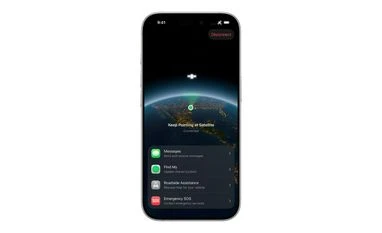
One of the earliest large-scale implementations came from Apple, which introduced Emergency SOS via satellite with the iPhone 14 in 2022 through a partnership with Globalstar. The system allows users to send emergency messages in areas without terrestrial connectivity.
Since then, Apple has expanded the feature set to include roadside assistance, Find My updates, and satellite messaging in select regions. Apple also invested in expanding Globalstar’s satellite infrastructure to support these services.
However, Apple’s implementation is still fundamentally different from full-scale D2D. It is designed around low-bandwidth emergency communication rather than continuous voice or data connectivity.
A more aggressive push is now coming from SpaceX through Starlink’s “Direct to Cell” initiative in partnership with T-Mobile in the US. Unlike Apple’s approach, Starlink is attempting to turn satellites into extensions of terrestrial cellular towers, allowing regular smartphones to connect directly without specialised hardware.
The service initially focused on SMS and emergency messaging, but has gradually expanded toward limited app support and voice features. T-Mobile said the system now supports messaging, location sharing, select apps, and emergency texting in areas without tower coverage using compatible smartphones from the past few years.
Recently, T-Mobile also announced plans to collaborate with AT&T and Verizon to reduce coverage dead zones using satellite-based D2D systems.
At the same time, companies such as AST SpaceMobile are pursuing a different architecture altogether. The company is building a dedicated space-based cellular network intended to connect directly with standard smartphones.
AST SpaceMobile is working with carriers including AT&T and Verizon in the US and has also partnered with Vodafone Idea (Vi) to explore satellite-based direct-to-phone connectivity in India.
Where D2M fits in and why it is moving differently
Alongside D2D, India is also developing direct-to-mobile (D2M) broadcasting, which operates on a very different principle.
D2M is a one-way broadcast system, not a two-way communication network. It allows smartphones to receive content such as live TV, video, and emergency alerts without using mobile data. Technically, it is closer to digital television than to cellular networks.
India has already conducted multiple trials of D2M using broadcast standards such as ATSC 3.0, operating in the 470–582 MHz band. These trials have focused on ensuring that D2M transmissions do not interfere with existing telecom networks and can coexist with 4G and 5G services.
But D2M has a different bottleneck
While D2M is further along on the network side, it faces its own challenge. Unlike D2D, which builds on cellular hardware, D2M requires additional components, including broadcast receivers and extra RF and baseband processing capabilities. These are not currently present in mainstream smartphones.
Integrating them would increase device cost and complexity, particularly in a price-sensitive market such as India.
Telecom operators have also raised concerns about D2M, particularly around spectrum usage and the potential impact on their business models. Since D2M enables content delivery without using mobile data, it could reduce demand for data services, especially for video consumption.
At the same time, the government sees D2M as a way to offload video traffic from mobile networks and enable large-scale content delivery more efficiently. This creates a structural tension between telecom operators and broadcasters, similar to broader debates around OTT regulation and network usage.
A hybrid future?
Taken together, D2D and D2M point to a broader shift toward hybrid communication systems, where multiple layers coexist:
- Cellular networks for primary connectivity
- Satellite systems for coverage extension
- Broadcast networks for efficient content delivery
However, the timelines for these layers are not aligned.
D2D depends heavily on global hardware cycles and standardisation, meaning its rollout in India will likely follow global developments rather than local policy timelines. Meanwhile, D2M, while more advanced in terms of trials, depends on device ecosystem support, which is still evolving.
In the near term, both D2D and D2M are likely to remain limited to pilot deployments and niche use cases.
D2D will likely remain restricted to emergency services until hardware capabilities improve and regulatory frameworks stabilise. D2M may see earlier deployment in areas such as public broadcasting and emergency alerts, but scaling it to mainstream smartphone usage will require changes at the device level.

 "India's D2D ambitions depend on hardware and global standards: Explained")


 Connect with us on WhatsApp