Home / Technology / Tech News / Plans unveiled for Future Circular Collider to explore mysteries of Physics
Plans unveiled for Future Circular Collider to explore mysteries of Physics
Plans for Future Circular Collider a nearly 91-kilometre loop along French-Swiss border and below Lake Geneva published late Monday put finishing details on a project roughly a decade in the making
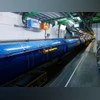
For roughly a decade, top minds at CERN have been making plans for a successor to the Large Hadron Collider. | Photo: Reuters
Top minds at the world's largest atom smasher have released a blueprint for a much bigger successor that could vastly improve research into the remaining enigmas of physics.
The plans for the Future Circular Collider a nearly 91-kilometre loop along the French-Swiss border and below Lake Geneva published late Monday put the finishing details on a project roughly a decade in the making at CERN, the European Organisation for Nuclear Research.
The Future Circular Collider (FCC) would carry out high-precision experiments in the mid-2040s to study known physics in greater detail, then enter a second phase planned for 2070 that would conduct high-energy collisions of protons and heavy ions that would open the door to the unknown, said Giorgio Chiarelli, a research director at Italy's National Institute of Nuclear Physics.
History of physics tells that when there is more data, the human ingenuity is able to extract more information than originally expected, Chiarelli, who was not involved in the plans, said in an e-mail.
For roughly a decade, top minds at CERN have been making plans for a successor to the Large Hadron Collider, a network of magnets that accelerate particles through a 27-kilometre underground tunnel and slam them together at velocities approaching the speed of light.
Ultimately what we would like to do is a collider which will come up with 10 times more energy than what we have today, said Arnaud Marsollier, a CERN spokesman. When you have more energy, then you can create particles that are heavier.
The blueprint lays out the proposed path, environmental impact, scientific ambitions and project cost. Independent experts will take a look before CERN's two dozen member countries all European except for Israel decide in 2028 whether to go forward, starting in the mid-2040s at a cost of some 14 billion Swiss Francs (about USD 16 billion).
CERN officials tout the promise of scientific discoveries that could drive innovation in fields like cryogenics, super-conducting magnets and vacuum technologies that could benefit humankind.
Outside experts point to the promise of learning more about the Higgs boson, the elusive particle that has been controversially dubbed the God particle, which helped explain how matter formed after the Big Bang.
Work at the particle collider confirmed in 2013 the existence of the Higgs boson the central piece in a puzzle known as the standard model that helps explains some fundamental forces in the universe.
This set of reports represents an important milestone in the process, but a full sense of the likelihood of it being brought to fruition will only be known through careful studies by scientists, engineers and others, including politicians who must make difficult decisions at time when uncertainty rules the day, Dave Toback, a professor of physics and astronomy at Texas A&M University, said in an e-mail.
The new collider provides an exciting opportunity for the particle physics community, and indeed all of physics, on the world stage, said Toback, who was not affiliated with the plans, and who worked for years at the Fermilab Tevatron collider in the United States that was shut down in 2011.
CERN scientists, engineers and partners behind the plans considered at least 100 scenarios for the new collider before coming up with the proposed 91-kilometre circumference at an average depth of 200 metres. The tunnel would be about 5 metres in diameter, CERN said.
(Only the headline and picture of this report may have been reworked by the Business Standard staff; the rest of the content is auto-generated from a syndicated feed.)

 "Plans unveiled for Future Circular Collider to explore mysteries of Physics")


 Connect with us on WhatsApp