
UNHCR concerned over widespread return of Afghan refugees from Iran, Pak
UNHCR head in Afghanistan, Arafat Jamal, said that the country is not well prepared to receive this influx of returnees
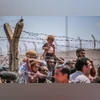 "UNHCR concerned over widespread return of Afghan refugees from Iran, Pak")
Explore Business Standard
UNHCR head in Afghanistan, Arafat Jamal, said that the country is not well prepared to receive this influx of returnees
The UN High Commissioner for Refugees (UNHCR) has voiced concern over the widespread and disorganised return of Afghan refugees from Iran and Pakistan, terming the situation in Afghanistan critical, TOLO News reported.
UNHCR head in Afghanistan, Arafat Jamal, said that the country is not well prepared to receive this influx of returnees. He demanded restraint, financial support, international dialogue, and cooperation to handle the chaotic situation better and achieve a more stable outcome.
Arafat Jamal said: "However, today what we are seeing is the undignified, disorganised, and massive exodus of Afghans from both countries, which is generating enormous pressures on the homeland that is willing to receive them and yet utterly unprepared to do so. We are calling for restraint."
Jamal said so far, more than 1.6 million Afghans, including 1.3 million from Iran, have come back to the country this year, a figure more than the UN's forecasts. He termed the intensity of this trend alarming, noting that on some days, over 50,000 people have been reported crossing through the Islam Qala border.
He further stated, "Of concern to us is the scale, the intensity, and the manner in which returns are occurring. In terms of the scale, over 1.6 million Afghans have returned from both Pakistan and Iran this year alone, including 1.3 million from Iran," TOLO News reported.
Some Afghan refugees living in Iran have expressed concerns regarding forced deportations. They have said that they are not able to go to work and are being taken into custody from markets and workplaces.
Enayat Alokozai, an Afghan refugee in Iran, said: "We are facing a humanitarian disaster in the refugee sector. Afghan refugees in Iran are facing serious challenges and are being arrested from marketplaces and workplaces."
The UN's warning comes as the number of Afghan refugees deported from neighbouring nations, particularly Iran, has increased, TOLO News reported.
Meanwhile, the World Health Organisation (WHO) has issued a warning regarding the rising spread of infectious diseases among Afghan migrants deported from neighbouring nations amid poor sanitary conditions, Khaama Press reported.
The WHO emphasised the need to enhance medical resources and staff capacity to address the increasing health risks. It has reported a rise in respiratory infections, skin conditions like scabies, diarrhoea and suspected COVID-19 cases among those deported from neighbouring nations.
The ground assessments carried out at key border points, especially Islam Qala in Herat Province, reveal that upper respiratory infections are the most common diseases spread, followed by diarrhoea and dehydration, particularly among children and the elderly. The WHO has also flagged cases of scabies and COVID-19 among deported Afghan migrants.
In response to the spread of diseases, the WHO has launched emergency health screenings and mass vaccination campaigns in collaboration with local health authorities at Islam Qala and Spin Boldak border crossings. These initiatives have been launched to stop further outbreaks and provide critical care to vulnerable people.
(Only the headline and picture of this report may have been reworked by the Business Standard staff; the rest of the content is auto-generated from a syndicated feed.)
First Published: Jul 13 2025 | 10:11 AM IST

