


Co-living space provider StayAbode plans to enter three more cities
StayAbode, which has raised three rounds of fundings from marquee real estate investors will be investing the money to iron out the roadmap to serve millennials across Southeast Asia
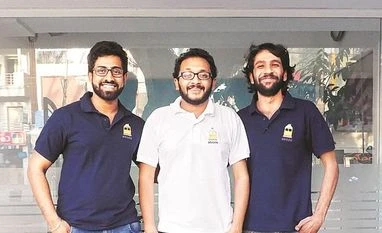 "stayabode, viral chhajer, varun bhalla, devashish dalmia,")
premium
Last Updated : Aug 12 2018 | 5:29 PM IST
When Priyanka Slathia moved to Bengaluru from Jammu to work as a business analyst a year ago, she had a troublesome experience. Her paying guest accommodation had an irregular wifi connection and poor electricity back-up. Even the housekeeping did not do proper cleaning, she says. In short, her abode was a mess.
Slathia’s friends suggested that she look for a new accommodation on StayAbode, a co-living space provider. And now her new address is a well-designed, spacious, fully furnished house, with a cook and housekeeping facility. With StayAbode, Slathia says she does not have to worry about a clean and safe stay. The apartment has a security guard round-the-clock and all tenants have an access card to enter the premises. Also, there is a full-time community manager who tries to solve tenant queries within a day, unlike the PG.
In India, millennials are becoming extremely mobile in search of greener pastures and in that process, they are also losing a large part of their social life. So the founders of the Bengaluru-based start-up, Viral Chhajer, Devashish Dalmiya and Varun Bhalla, who had earlier worked with companies such as Runnr and Treebo Hotels, took up the idea of co-living to provide accommodation to like-minded tenants, and StayAbode was born in 2016.
Tomoya Ogawa, CFO at Akatsuki, a Japanese gaming company which is one of the investors in StayAbode, says, “Co-living space is not just financially attractive, but also help millennials have a delightful living experience through bonding and social activities. We look forward to boosting this delight to the next level by offering our expertise in the entertainment-related field.”
Opportunity
The renting space market is already buzzing with start-ups such as Nestaway, CoHo, and Homigo, so how is StayAbode unique?
“Nestaway is more of a marketplace, but we are a lifestyle product,” says Chhajer. The company claims not only finding a house but also providing amenities which influence how tenants live. “We take care of everything in the house with value-added services. A large part of our focus is on building communities,” explains Chhajer.
The $8-10 billion co-living space market is growing at a 20-25 per cent rate, and the company feels with 65 per cent of the population below 35 years, the opportunity is immense as more and more youngsters move to cities for education and employment.
“With more and more people entering the metro city landscapes and exploring their careers, co-living becomes the emerging concept in the realty industry. This also brings a great opportunity for developers to tap into,” says Viswa Prathap Desu, senior vice-president (sales and marketing), Brigade Enterprises.
StayAbode founders Viral Chhajer, Devashish Dalmiya, Varun Bhalla
Revenue model
The rooms are given out on a contractual basis, with a minimum three-month contract. The average price for a bed is Rs 12,000, including housekeeping, wifi, electricity, and security. The rent is split into three major chunks, a part of which goes to the landlord, another part into utilities and about 15 per cent is pocketed by StayAbode.
Road ahead
The company which has raised three rounds of fundings from marquee real estate investors will be investing the money to iron out the roadmap to serve millennials across Southeast Asia.
The start-up is planning to grow deeper into Bengaluru with the addition 15 new properties. It currently has 16 properties.
StayAbode is also studying the Pune, Hyderabad and Chennai markets and would be launching in two of these by the end of this year. As it looks to more than double its number of beds from 950 to 2,000 by December, it has the short-term goal to hit a revenue figure of $4 million.
Fact box
Founded: 2016
Funding:
Feb 2017: Angel round from five investors
August 2017: Seed round from real estate investors
July 2018: Undisclosed pre-Series A round from Anupam Mittal, Vineet Sekhsaria and Japanese gaming company Akatsuki
Area of business:
Co-living spaces
Expert take: Opportunity lies in smaller cities
Rohit Pateria, founder and CEO, Placio
Shared accommodation is very promising as a business opportunity. However, many players are only targeting Bengaluru and NCR markets but the opportunity is emerging from many Tier 2 and 3 cities.
The biggest challenge is quality supply and operations execution. This is segment is at nascent stage constraint include lack of clarity on regulation, taxation, and government policies.
Organised players face stiff competition from a large number of local unorganised players.
For any company to be super successful in this space, it should constantly focus on customer service, bring quality, use technology and create a pool of trained workforce. I see the market getting into consolidation phase in the next four to five years with four-five large players in the market.