


I see lot of retail flows this year from FD investors: Amfi chairman
A few stocks have been driving the market and the number of underperformers has gone up, A Balasubramanian said
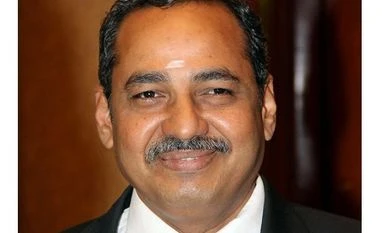 "A Balasubramanium")
premium
A Balasubramanium
Last Updated : Aug 23 2018 | 11:54 PM IST
The Association of Mutual Funds in India (Amfi) will be holding the second edition of its annual MF Summit today. A Balasubramanian, chairman of Amfi and chief executive officer of Aditya Birla Sun Life MF, talks to Jash Kriplani on what lies ahead for the industry. Edited excerpts:
What can one expect from this year’s MF Summit?
The Summit is centred around taking the sector to the next level, both in terms of size and in emphasising the role of digital platforms. We have also brought registrars and transfer agents together to discuss ways to improve the quality of service for customers. We hope the conference adds value to the participants and highlights areas for improvement.
Could measures such as cut in additional expense ratio and moving of location-based incentives to beyond the top 30 cities (B-30) impede the sector's growth?
When the additional expense ratio and incentive for B-15 (beyond the top 15 cities) were introduced, the industry had equity assets of Rs 2 trillion. That has surged to Rs 10 trillion. In 2012, MFs were allowed to charge an additional 0.2 per cent in expense ratios as they were asked to credit income earned from exit loads back into schemes. In the past five-six years, the sector has grown five-fold. This growth would have helped MFs to compensate for giving up exit loads, which they used for their operational expenses.
After the B-15 geographies saw healthy growth, the regulator is now pushing to improve penetration levels in Beyond-30 locations. So, the decision to adjust these ratios is purely based on analytics. As the sector grows in size, one needs to be prepared to absorb such adjustments. There might also be a slowing of flows in the near term.
Could fixed income emerge as the next driver for industry’s growth?
I see a lot of retail flows coming this year from fixed deposit (FD) investors, shifting some portion of their investments towards fixed income schemes. Adjusted for tax, fixed income gives better return over a three year-period.
These schemes could get a huge share of the lumpsum money that is parked in FDs of banks. Today, the yields on 10-year bond is close to eight per cent. Corporate yields are close to nine per cent. Portfolio yields are much better than last year. At Aditya Birla Sun Life MF, we are aiming to add investors through fixed income schemes, while we continue to build our equity assets. We are targeting two million customers in fixed income schemes by FY20.
The top five fund houses account for more than half of the sector’s assets. Could we see the industry consolidating, given its long tail?
In the past 25 years, Aditya Birla Sun Life MF has had three acquisitions. The industry had even fewer participants when we did all these acquisitions. It is still at a nascent stage and there is ample room for growth. The market is still wide open. However, players that don’t take a serious interest in building their retail base will find the going tough. Without a healthy retail base, they could find it difficult to run a viable business. So, consolidation will happen but, at the same time, we will see entry of new players.
Any new products in the pipeline?
We are closely watching exchange traded funds (ETFs) as a category. We are trying to get market share in that space. We already have index ETFs and Nifty ETFs. Now, we are looking to have a much larger presence in that category. Beside, we are waiting to get approval for a pharma fund. We will launch it as and when we get approval.
Will active funds find it difficult to generate alpha (excess return of an investment relative to a benchmark index)?
One of the challenges for fund managers has been that only a handful of stocks are contributing to the Nifty's and Sensex's (benchmark indices of the two major bourses) performance. A few stocks have been driving the market and the number of underperformers has gone up. It can’t stay like this for long. Ultimately, a fund manager’s stock picking ability will generate alpha over the long term. We go through this underperformance every three-four years, when the market sees a consolidation. Some of this underperformance is also due to recent scheme re-classification.
However, this should not continue beyond a point. In a developing market like India, there is still a lot of scope to create alpha. We have seen this on several occasions in the past during market consolidation.