“About 70 per cent of IT budgets are spent on the run side of the business (risk maintenance, infrastructure management, testing), and 30 per cent on the change side,” said Rao. “But the IT budgets have been constant. This means when IT deals are renewed, clients will look at 20-30 per cent cost take out.”
Infosys, the second largest IT services provider in the country, and its peers expect more “commoditisation” — unique goods becoming simple ones for customers — of the traditional IT services, such as testing and infrastructure management. Clients are spending the savings from traditional services in digital.
Rao said he had observed this trend for some time now, primarily because of the digital disruption. “That is not new; this is what commoditisation is. On the actual rate card, there is absolutely no pressure.”
The company, in a statement, said, “Cost take-outs by clients do not necessarily translate into an impact on vendor pricing. There are enough levers available to meet the client demand on cost take-outs without necessarily impacting the pricing.”
The sector has also seen a shift from rates being determined by hours spent to services to outcome-based projects. Infosys, however, claims it has seen impact on large deals. “Our deal pipeline for the past few years has been decent,” said Rao.
The Bengaluru-based company is also likely to see some initial impact as it increases local hiring in different global markets they serve, including 10,000 people in the US over the next two years. Automation of repetitive works to bring in efficiency and manage costs will take two three years from now to reflect on Infosys’ profitability.
“We are in the early stages of automation. What we have done has more to do with scripting and less to do with artificial intelligence. Hence, the opportunity is huge. In the next two-three years, we can the benefits from automation more clearly. Today, we are in a situation where whatever benefit we get from automation, a significant part of it is passed on to clients,” said Rao.


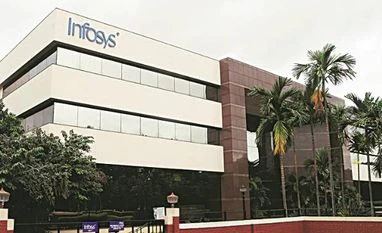 "Older IT deals to be 30% smaller, says Infosys COO")