


OYO Hotels not our rival as of now, says Accor Hotels India COO
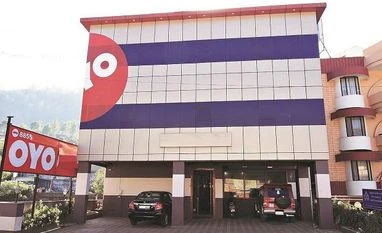
In a very short span, the Ritesh Agarwal-founded start-up has emerged South Asia's largest hospitality chain valued at $5 billion having its presence in 10 countries
 "OYO")
premium
4 min read Last Updated : Mar 18 2019 | 1:45 AM IST
Accor Hotels, Europe’s largest hospitality group that forayed into India a decade back, does not consider OYO Hotels as its immediate rival considering the differentiated positioning the two have in terms of price and business model.
It is, however, fully cognizant of the OYO’s growth and expansion plans. Jean-Michel Cassè, chief operating officer, India and South Asia of Accor Hotels, said he won’t be surprised if the French major finds the six-year-old homegrown brand snapping at its heal very soon and coming close to Accor’s core business. “I don’t think OYO is a rival as their business model is completely different. We are not playing in the same price game. However, I cannot say blindly that they are not a rival. If we look at their size, their growth, we don’t know where they will be heading tomorrow,” Cassè said.
In a very short span, the Ritesh Agarwal-founded start-up has emerged South Asia’s largest hospitality chain valued at $5 billion having its presence in 10 countries. The Soft Bank-backed firm has charted an aggressive expansion plan across geographies and has ambitions to become the world’s largest hotel company overtaking Marriott by 2023.
OYO’s agile approach has been its strength, said Cassè. “They are very flexible, very fast and are very quick in shifting strategies according to where the winds take them, in their best interest. So, I won’t be surprised to see OYO coming very close to what is our core business today,” he said.
Meanwhile, the owner of ibis, Sofitel, Banayan Tree, among other brands, has its hands full executing the expansion for the India market. In the works are 20 hotels that will come up over the next five years and add to its inventory of 52 hotels and 9,500 rooms across all its brands. Accor expansion strategy will include ‘densify’ presence in 22 cities through Novotel and Ibis across the economy and mid-scale segments and further tap the luxury segments.
Accor has become the second-largest operator in the luxury space globally after the acquisition of Fairmont, Raffles, and Swissotel a few years ago and Movenpick last year. It is giving the firm more opportunity to bring these brands to India, he added.
“In key cities, we are looking to grow our luxury network by growing brands such as Fairmont and Sofitel. We are also aiming to bring our ultra-luxury brands like Raffles to India,” Cassè said.
Over the last two years, average occupancy rates in India’s hospitality industry has inched up to 65 to 70 per cent. This has enabled the hospitality firms to reconsider fresh investment for growth, said Cassè. However, he pointed out that the average room rent (ARR) is still not at the expected levels. “The ARR is still not at the level at which we are expecting – the industry is still trading at Rs5800 per night, which for the quality of the hotels we have at large -- whether economy, mid segment or luxury, is still below expectation,” he said, adding there is a room for 20 per cent growth in the ARR.
To further boost the ARR and occupancy, Accor will sharpen focus on the leisure segment, which peaks up during the weekend. It will address the segment through introduction of brands like Banyan Tree to India. It’s also looking to tap deeper into the MICE (meetings, incentives, conventions and exhibitions) segments as there are new pockets for them are emerging in cities like Delhi and Mumbai, said Cassè.
In June 2018, the Union cabinet cleared a proposal for leasing out 3.7 acres at Delhi’s Pragati Maidan to a private player for construction of a hotel. The funds raised through the process would be utilised by the India Trade Promotion Organisation (ITPO) to finance the Integrated Exhibition-cum-Convention Centre (IECC) project at Pragati Maidan. An airport coming up near Dwarka and a Reliance Centre in Mumbai will also offer opportunity for MICE. All this will help the hospitality firms get more business, he added.
Room for growth
To add 20 new hotels in India across the brands in 3 to 5 years
Accor presently has 52 hotels and 9500 rooms in India
Sharpen focus on leisure and MICE segments to boost ARR
Introduce more luxury brands like Raffles, Banyan Tree