


Prolonged dismal trend in auto demand to weigh on general insurance players
Motor insurance accounted for 38% of gross direct premium in FY19
 "Representative image")
premium
Representative image
4 min read Last Updated : Jun 04 2019 | 3:34 AM IST
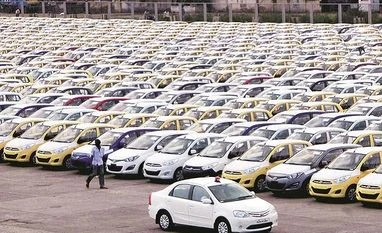
The subdued automobile offtake across segments continued for the seventh month on the trot. Weak sales in May 2019 were on account of higher financing cost, liquidity constraints, and muted consumer sentiment. The prolonged dismal trend in auto demand is negative for the general insurance sector, given the dependence on the motor segment.
According to the General Insurance Council (GIC), the motor segment — own damage (OD) and third-party (TP) — accounted for 38 per cent of gross direct premium income (GDPI) pie of non-life insurers in 2018-19 (FY19).
According to Rakesh Jain, executive director and chief executive officer at Reliance General Insurance, “Growth of the automobile segment always augments business opportunities for general insurance, and in a good year, new vehicle sales give about 15 per cent growth to the insurance industry through new business.”
Past trends also show there is close correlation between automobile sales and the income of non-life insurers.
According to the GIC, GDPI from the motor segment rose a paltry 1.4 per cent year-on-year in April 2019, against 14.2 per cent growth a year ago. This confined the overall GDPI growth of the sector at 14.5 per cent, despite double-digit growth in other key segments such as fire and health.
The Society of Indian Automobile Manufacturers’ (Siam) data shows that overall vehicle sales in FY19 rose by a meagre 5.2 per cent, against 14 per cent growth clocked in the previous year.
Though the regulator’s intervention, in terms of long-term TP cover (three years for two-wheelers and five years for passenger vehicles), provides near-term boost to the insurers’ top line, motor-OD (15-16 per cent of non-life’s GDPI) will be hit hard. This is because the motor-OD policy is generally taken for new vehicles and is not mandatory, unlike motor-TP. In April 2019, motor-OD registered a 5.4 per cent decline in GDPI, while motor-TP had a 7 per cent rise.
Benefits from long-term motor-TP would fall, as outstanding vehicles get covered under the new regulation announced in September last year and due to no hike in premium.
The Insurance Regulatory and Development Authority of India had recently proposed to keep the prices of long-tenure motor-TP unchanged, while hiking premium for one-year motor cover by 3-15 per cent.
According to analysts at SBICAP Securities, no hike for long-term TP policies is a reflection of pressure from the auto original equipment manufacturers’ lobby, amid slowing new vehicle sales.
Passenger vehicles and two-wheelers, off-take of which was most impacted in FY19, roughly have around 40 per cent share in motor-TP in value terms. This indicates the degree of impact the general insurers could have if the offtake fails to revive.
According to Siam’s expectations, sales growth of these two automobile segments is likely to be 3-5 per cent (cars) and 5-7 per cent (two-wheelers), respectively. But, given the lower base of FY19, the estimated growth still looks dull, say industry experts.
Yet, some optimism in the automobile sector can be expected as the elections are over, monsoons are likely to be near-normal, and pre-bookings ahead of the implementation of Bharat Stage-VI norms (stringent emission regulations) are expected, says an analyst at a domestic broking house.
Further, the rise in motor-OD prices can help insurers in the near term, say analysts. Among the listed players, ICICI Lombard General Insurance has 24 per cent share of motor-OD in the total GDPI and it is 16 per cent in the case of The New India Assurance Company as of March 2019. This provides some relief, though motor-TP forms 21 per cent of their respective GDPI.
Analysts are positive on ICICI Lombard General Insurance, given its distribution strength and strong brand that would help grow profitably, though rich valuation (39x 2019-20 estimated earnings) could limit the upsides in the stock.