


This South Korean used his telecom biz to build a thriving fintech in India
Charlie Lee's firm True Balance leverages on its mobile phone balance checking business to assess and disburse loans with simple documentation in a matter of minutes
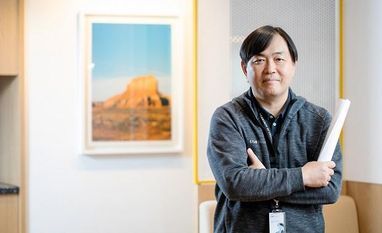 "Cheolwon 'Charlie' Lee")
premium
Cheolwon 'Charlie' Lee, founder, True Balance
8 min read Last Updated : Nov 09 2021 | 6:37 PM IST
Dilip Girase, 33, runs a business making and selling incense sticks in Jalgaon, Maharashtra. Some time back, he put in Rs 50,000 to buy raw material and was left with just Rs 700 to take care of his household needs. It would take him a while to sell his wares see the money come in. Obviously, the man was in desperate need of money. So he clutched at a few straws but could get next to nothing. That's when a friend sent him a link to an app, which he downloaded, and with a few clicks here and there, he was able to get an instant loan to tide over his cash crunch.
Girase says he had applied to Truebalance, the fintech that extended the financial assistance, while dining at a small joint in his hometown. He adds that the money came in even before his food did. "Faster than a pizza," chuckles Cheolwon 'Charlie' Lee, the South Korean founder of the fintech firm. The interest rate was slightly higher, but he was okay with it as the loan helped him tide over an emergency.
Another borrower, Ram Bhandari, who works as a delivery boy for Flipkart, says there is no pressure from Truebalance to pay up on due dates, and that the company is even accommodative, granting borrowers a pay-later option in case they aren't able to service the loan on time.
The Softbank-backed payment and financial services platform True Balance, founded in 2014, has taken a few pivots before finding its market fit business model. At present it is tapping into the vast opportunity in the lending segment.
The business model
Truebalance' business model thrives on the country's financial inclusion drive.
Says Lee: "To give you a perspective, 87 per cent Indians have bank accounts but only 12-13 per cent use them, the rest don't or can't use them frequently. Only 70 million use credit cards, and only 260 million have a credit score, of which only 70-80 million have a good one. Effectively, one billion people are out of this ecosystem...and that is our target audience."
The firm doesn't cater to the rockbottom of the socio-economic pyramid but goes just a few notches up to reach out to small traders and business people in India's smaller towns--those with incomes of Rs 10,000-40,000 a month, typically. And while one has to submit the PAN, aadhaar and bank statement to get what Lee calls a cash loan, the company also has a loan that does not ask for income proof called 'Level-up', with an average ticket size of Rs 8,000, going up to Rs 10,000 max, and for a tenure not usually exceeding three months. "However, basic KYC norms have to be followed," says Lee.
The documentation-backed 'cash' loan has a larger ticket size of up to Rs 50,000 and a tenure of six months on the outside.
The interest rate, at five per cent a month in most cases, is where Truebalance makes its money. Lee says the rate could, on rare occasions, go up to even 10 per cent, and is based on a mechanism called risk-based pricing, or RBP, that assesses the creditworthiness of the borrower based on five metrics (see box).
Default rates
Of course, since the risk profile of the typical borrower is high, so is the default rate, at about 10-12 per cent. But then, so is the interest rates--something that borrowers like Girase are comfortable with. Truebalance also has a bening recovery policy and does not send reminder 2-3 days in advance, but only a few days after the EMI does not come in. Apart from being accommodative enough by offering a pay-later facility, albeit with a minumum payment of Rs 500-700--the company has a policy of not engaging recovery agents or otherwise using coercive methods to get its money back.
He further added: "Our emphasis is more on underwriting than on recovery, which is why we have strict protocols in place before we sanction the loan." He adds that Truebalance is heavily focused on data collection, with information running into 700 terabytes and 1.5 billion loglines. The firm uses five broad metrics to determine the borrower's RBP, based on which it approves the loan and arrives at the interest rate, or rejects it outright (see box: Five broad data
sets).
The fintech journey
Lee has been working in the Indian market since 2002, when he started offering telecom hello tunes on mobile handsets in association with Airtel. Employed at that time with an American firm, he started his own company, Access Mobile, in 2006, and everything was hunky-dory until the smartphone wave disrupted the telecom sector in India.
He was quick to reinvent himself and started Truebalance in 2014, to focus on the app and B2C business segments. "We saw tremendous scope in India given the level of maturity in the market. We started off in 2014 with balance checking, added balance recharge in 2015, and gradually got into insurance, DTH, electricity bills, movie ticket, meals and other payments in 2017. And from there, evenutually into loans in 2019," he says, adding that while the other businesses remain, it is the lending business that is his cash cow.
The leverage: Lee says he used the balance checking service for prepaid users as a stepping stone to enter the fintech space. "We saw scope in fintech using balance checking as a tool. You see, balance checking is the gateway to balance recharge. And recharge is the gateway to a universe of fintech services, starting with payments and going all the way up to loans," he says.
His logic? Lee asserts balance recharge is the biggest payment service in the world. "Just imagine, one billion people recharging 3-4 times a month--that's 3-4 billion transactions a month. Once you've established yourself in balance recharge, it is easy to get into other payment services such as movie tickets, meals on mobile and eventually to loans."
Fundraise and future plans
Lee claims Truebalance does about 6,000-7,000 loans a day, with ticket sizes starting as low as Rs 1,000 and going up to Rs 50,000. The firm averages about Rs 100 crore a month in loans, and plans to get into neobanking in 3-4 years.
The firm has been through five rounds of funding, with participation from Softbank, ICICI Bank and several other celebrated investors, through whom it has raised about $85 million. "Most of that was equity, but from this year we are also relying on debt funding as it gives us a play on margins. We have borrowed about Rs 250 crore in debt alone, of which $40 million was borrowed this year alone, from Northern Arc, Pace, E-clear and others," says Lee.
Five broad Truebalance data sets to assess a loan application
a. SMS: Trubalance collects data on phone recharges, other expenditure and deposits to determine the income level and spending habits of the applicant.
b. Application data: Is the applicant using Facebook, Whatsapp or casual games,
OR
Does he use Amazon, PayTM, and banking apps? To what extent does he use them?
c. Location info: "Most of our borrowers get money in cash. We cannot just rely on SMS to determine credit score, or assess whether a user is salaried or otherwise. Using location, we track his movements during both day and night, and determine where he lives and the extent to which his movements are routine--like say, home to place of work and back," says Lee.
d. Social behaviour data: Does he have regular contacts, such as parents or spouse, whom he calls or sends SMS to frequently? Says Lee: If he does, then he is more likely to be more creditworthy.
e. Handset usage: "We can track whether the applicant is using Redmi5, Xiaomi or a high-end Galaxy phone. That gives us an idea of the kind of things he can afford," says Lee.
Apart from these five tools, Truebalance uses several other types of data to determine credit worth, particularly in the case of Level-up loan potentials who are not required to submit financial data.
"Once a user downloads our app, we seek permission to access his SMS, calls, the kind of handset he uses and other metrics. We collect all this data on our very secured server and process it in real time before disbursing. The tech we use is essentially AI and Amazon web services, though we are also using various machine learning tools," says Lee.