


Glasgow COP26: India's emissions growing faster than most nations'
In 2019, India's carbon dioxide emissions grew 3.7%, the corresponding increase for China and Russia was 0.7%
 "Narendra Modi")
premium
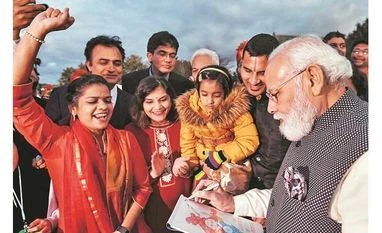
Prime Minister Narendra Modi interacts with the Indian community, in Scotland | Photo: PTI
Prime Minister Narendra Modi has set 2070 as the target year for India to achieve net-zero emissions and promised a green India by 2030. But even as the target announced at the COP26 Summit in Glasgow is 49 years away, an analysis of data shows that India was already on its way to reducing carbon dioxide emissions.
Topics : Climate Change COP G20 CO2 emissions