


GDP data confirms demand slowdown; consumption expenditure at 17-qtr low
Consumption expenditure, reflecting demand, grew only 3.14% in Q1FY20
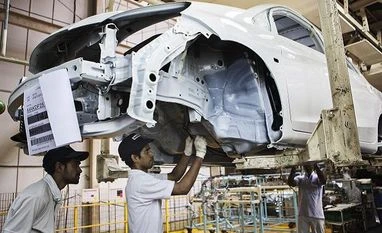 "GDP data confirms demand slowdown; consumption expenditure at 17-qtr low")
premium
The gross domestic product (GDP) data released on Friday confirmed distress stories emanating from different sectors. The private final consumption expenditure (PFCE), which reflects demand in the economy, grew 3.14 per cent in the first quarter (Q1) of 2019-20 (FY20) — a 17-quarter low.
The PFCE grew by 7.2 per cent in the previous quarter (January to March or Q4 of 2018-19 or FY19). In the year-ago period, PFCE growth was 7.31 per cent.
Economists and analysts identified this as the most distressing signal.
“Collapse of private consumption demand growth from 10.6 per cent in Q4FY18 to 3.1 per cent in Q1FY20 is the real cause of concern,” said Devendra Pant, chief economist at India Ratings.
He added, “Both structural and cyclical issues are plaguing the economy. In order to bring the economy back to a respectable growth path, both short- and long-term measures are required.”
Also, the PFCE’s share in GDP declined to a seven-quarter low of 57.7 per cent in Q1FY20. In Q4FY19, it was 59.3 per cent, and it was 58.7 per cent in Q1FY19.
Demand is a function of sentiments, said Ranen Banerjee, leader of public finance and economics at PwC India, adding that at the moment, it was negative because of slowdown and job losses. “When sentiments are negative, people spend less, at least their discretionary spending is less,” he said.
The PFCE grew by 7.2 per cent in the previous quarter (January to March or Q4 of 2018-19 or FY19). In the year-ago period, PFCE growth was 7.31 per cent.
Economists and analysts identified this as the most distressing signal.
“Collapse of private consumption demand growth from 10.6 per cent in Q4FY18 to 3.1 per cent in Q1FY20 is the real cause of concern,” said Devendra Pant, chief economist at India Ratings.
He added, “Both structural and cyclical issues are plaguing the economy. In order to bring the economy back to a respectable growth path, both short- and long-term measures are required.”
Also, the PFCE’s share in GDP declined to a seven-quarter low of 57.7 per cent in Q1FY20. In Q4FY19, it was 59.3 per cent, and it was 58.7 per cent in Q1FY19.
Demand is a function of sentiments, said Ranen Banerjee, leader of public finance and economics at PwC India, adding that at the moment, it was negative because of slowdown and job losses. “When sentiments are negative, people spend less, at least their discretionary spending is less,” he said.
Topics : GDP Indian Economy GDP data Economic slowdown