The rating agency said that higher realisation is due to commodity inflation, market share from the unorganised segment. Also, despite heightened competition from quick commerce players, revenue of food and grocery retailers will be higher by 38 per cent compared to FY20.
The report also said that operating margins are expected to sustain at 6.3-6.8 per cent due to better economies of scale, gradual pass-through in input prices in spite of normalisation of store rentals. In FY21 when the pandemic induced restrictions led to revenue degrowth and margins dropped to 5.5 per cent, margins remained largely in the 6-7 per cent range.
“Credit profiles will also remain strong, characterised by healthy cash accruals and balance sheets. An analysis of four retailers, which account for around a third of the organised sector’s revenue of Rs 130,000 crore, indicates as much,” Naveen Vaidyanathan, director, Crisil Ratings.
He added, “Low organised sector penetration of just 5 per cent within the overall F&G retail market provides the players ample growth opportunities.
Retailers are also expanding their presence in tier II and tier III cities while also expanding in metros and tier I cities. The area under operations grew by 40 per cent over the past two financial years as retailers continued to expand despite the pandemic as they took advantage of lower real estate prices.
Crisil said that this momentum will continue and another 10-20 per cent is expected to be added this fiscal.
The report also noted that brick-and-mortar retailers are facing strong competition from quick-commerce entities as they deliver food and grocery items within minutes and Crisil expects both models to co-exist.
Brick-and-mortar retailers will continue to remain relevant as they cater to customers for their weekly/monthly grocery shopping, as opposed to quick commerce, which typically caters to smaller, unplanned purchases by customers who prefer the convenience of shopping from home. Besides, traditional players are also looking to increase their online penetration, including by partnering with quick commerce players,” the report said.
“Credit profiles of food and grocery retailers will also remain stable, supported by strong cash-generating ability and low debt on balance sheets. Although players are expected to continue with their expansion plans, these will be funded largely from internal accruals and large liquid surpluses (estimated at Rs 1,500 crore as on March 31, 2022). This will ensure debt protection metrics such as debt/Ebitda and interest coverage remain at healthy levels of 0.2 time and over 25 times this fiscal compared with 0.25 time and 22 times last fiscal,” Shounak Chakravarty, associate director, Crisil Ratings said.
CRISIL Ratings does not expect further waves of the pandemic to materially impact operations, unless severe. “Slower than-expected ramp-up of newer stores and increased competition from unorganised and quick commerce segments would be key monitorables,” CRISIL Ratings said in its report.


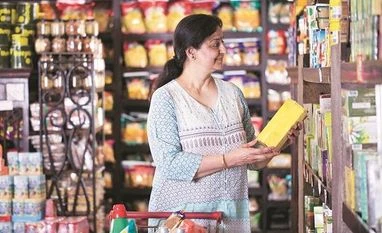 "grocery shopping")

