IRFC has appointed arrangers in the US for the bond issue. Insurance companies and pension funds are likely to subscribe to them. According to a source close to the development, IRFC will issue Global Medium Term Note (GMTN) with repayment tenure of 15-25 years. The interest rates are expected to be lower than 4.73 per cent at which IRFC raised $500 million last year from the European and Asian markets. It had offered medium-term notes in London, Singapore, and Hong Kong.
The need to go for overseas borrowings arose because the Indian Railway did not fully avail of Rs 1.5 trillion from the Life Insurance Corporation (LIC). Though LIC had signed a deal with the railways back in March 2015, so far it has disbursed only about Rs 18,000 crore. This was because insurance regulator Irdai had raised concerns on LIC investment in the railways. It wanted an explicit sovereign guarantee as well as special status for such bonds since guidelines did not allow LIC to have an exposure of more than 25 per cent of its net worth to a single entity.
Besides, foreign currency loans work out cheaper compared to fundraising in the domestic market, said the official. “The railways has already secured $300 million Japanese Yen syndicated loans during the current financial year. In addition, we have already signed a $750-million loan with the Asian Development Bank (ADB) to part finance railways electrification,” he added. The railways’ plan to electrify over 28,000-kilometer over the next three financial years at a cost of over $7 billion. The ADB loan will be used for electrifying 3,378 km, taking at least 16 sub projects across 13 states.
According to the Budget, the railways plans to invest Rs 50 trillion till 2030 in infrastructure and rolling stock. This includes projects like dedicated freight corridors, doubling/tripling/rail on rail flyovers, electrification, revamping the signaling system and speed upgrading on the existing routes. The railways plans to invest Rs 1.6 trillion in capital expenditure, a 20 per cent increase over the last fiscal year. For this, there is an emphasis on faster implementation of works in the current year. At least 704 km of new line, gauge conversion and doubling was commissioned from April-August this fiscal year, up 36 per cent from 518 km in the year-ago period.


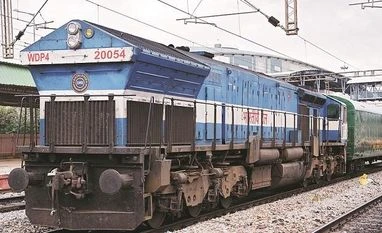 "Railways draws road map for FY20, plans to raise $1 bn in US market")

