


Success story: How 2 FPOs are rewriting the fate of tribal Odisha farmers
They have dispensed with middleman, get better crop prices
 "tribal odisha farmer family")
premium
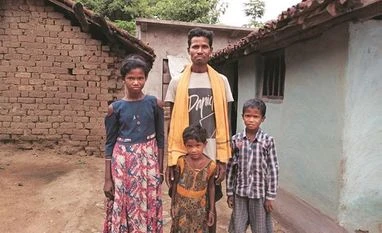
Roopchand Bhatra and his family in Umerkote of Nabarangpur
5 min read Last Updated : Jun 26 2021 | 6:10 AM IST
For many years, Roopchand Bhatra’s go-to-person has been the local trader, whether for seeds, fertiliser, credit, or help selling his crop. As Bhatra has only a small plot of land in Umerkote block in Nabarangpur district in Odisha, once these items have been set against the credit, he is left with very little for spending.
“He is a known figure here and he has been providing me input on credit. But whenever I asked him about the prevailing market price of the produce he bought from me, he used TO ignore my question. More often than not, at the end of the season, I was invariably in debt,” said Bhatra.
Troubled, he started looking for options and came across a representative of Pendrani Krushak Producer Company, a farmer-producer company. The representative happened to be a local village person who convinced Bhatra to become a member. After some reflection, Bhatra bought 50 shares of the FPO and became a member.
Next time he needed inputs for his small plot of land, Bhatra bought them with cash and, for the first time, received a proper receipt for his purchase. The local trader had never given him a receipt. “I was delighted to see the transparency in the process,” he said. Later, he approached Pendrani for selling his harvested maize. After the requisite quality checks, Bhatra sold 36 quintals of maize for Rs 55,000. Within 24 hours, the money was credited to his bank account. He used it to clear his dues with the local trader-middleman.
Bhatra is not alone in benefitting from a FPO in Nabarangpur. Kheduram Gond of Raighar block from the same district hired a combine harvester provided by Mauli Maa Mandi Producer Company which, like Pendrani, is into maize procurement. “Earlier I was harvesting paddy manually. When I got to know that Mauli Maa has a combine harvester and the pricing of the harvester was very affordable, I approached them. By using the machine, I harvested three acres of paddy in just two hours and saved both on labour and time,” said Gond. Both Bhatra and Gond are examples of how collectives can benefit farmers. But perhaps more striking still is the sheer business performance of Pendrani and Mauli Maa which is causing ripples in the FPO world.
Kheduram Gond of Raighar
Within a year of their inception, both the FPOs have managed to do a collective business of around Rs 4.07 crore in FY21 — that is 893 per cent more than the revenue they made the previous year.
Both the FPOs have sold 22,000 quintals of maize procured from farmers in FY21 as against sales of just 9,500 quintals in FY20. The average realisation from selling maize was around Rs 180-200 per quintal, far more than what Bhatra would have earned by selling through the traditional trader-middlemen nexus. The price included transport costs which, in the case of the FPOs, is facilitated through satellite village level procurement centres. “We procure even two bags of maize from farmers and if the quantity to be sold is more than 25 bags, we ensure on field procurement,” said Shubhendu Das, a senior manager at Access Development Services, a Resource Centre which has been supporting both these FPOs. Both Pendrani and Maa Mauli have 1,111 and 932 shareholders respectively with an equity of Rs 500 per member. The FPO wise equity by the end of the fiscal year was Rs 5.87 lakh and Rs 5.32 lakh respectively.
They have a total reach of 13,475 farmers, out of which 5,244 are women, who use their products and services. Around 70-80 per cent of the farmers are small, marginal, tribal farmers with limited resources. “Ideally, an FPO gets into the agri-input business at a later stage of its inception, but both these FPOs of Nabarangpur have managed to do so in the very first year of their operation,” said Das.
He says what sets these two FPOs apart is their financial performance, despite one of the toughest economic downturns during the lockdown. “The bulk of the maize was sold to starch and cattle feed producers in neighbouring Chhattisgarh, while a significant quantity was purchased by local poultry layer firms as feed,” said Das.
Of the 22,000 quintals of maize sold by both the FPOs, around 500 tonnes were even exported to Bangladesh from Junagarh in Odisha in FY21.
In addition, the FPOs have set up their own 2000 metric tonnes storage facility and started a hiring facility for combine harvesters. One the biggest problems in running an FPO is getting loans from financial institutions but, owing to their superlative performance, both have managed to get loans of over Rs 75 lakh within just one year of operation from NBFCs such as Samunnati and Nabkishan — loans which are difficult to secure.
One big problem which most FPOs have faced in the past is that once the handholding comes to an end, the business model dwindles which is why several of them fold up before being able to achieve any scale. “We are well aware of this problem with FPOs which is why our target is to make them earn a revenue of Rs 4-5 crore each in the next 3-4 years and a profit of around Rs 20-25 lakh so that they become self-sufficient and are in position to engage professionals from the market to run their company once the project support ends,” said Das.
News has spread of their success, despite the remoteness of the location. Several FPOs are eager to visit to understand how they did it.
Topics : Odisha crop prices Tribal farmers