


Cabinet approves National Education Policy 2020, brings in major reforms
According to the new policy, Board exams will be kept in low stakes and test actual knowledge of the student instead of rote learning
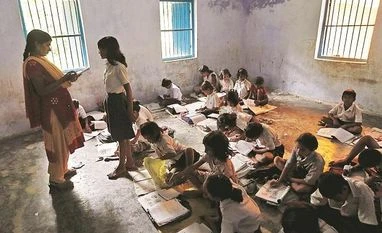 "An important expenditure for many families in Bihar is education. Some children are enrolled in government-run schools which may be far from where they reside, and where, some parents say, the quality of education is extremely poor. Thus, they want")
The report cards will be comprehensive on skills and capabilities instead of marks, according to the new policy
Board exams will be low stakes & test actual knowledge instead of rote learning; Mother tongue to be a medium of instruction till 5th grade; report cards will be a comprehensive report on skills and capabilities instead of just marks and statements: Government of India pic.twitter.com/IcLN6J90na
— ANI (@ANI) July 29, 2020Elaborating on the reforms, School Education Secretary Anita Karwal said at a briefing, "Board exams for classes 10 and 12 will be continued, but will be reformed to eliminate the need for taking coaching classes".
She further said, "Board exams will be redesigned to encourage holistic development and will also be made easier by testing core capacities and competencies. All students will be allowed to take board exams on up to two occasions during any given school year, one main examination and one for improvement, if desired. All students will take school examinations in classes 3, 5, and 8 which will be conducted by the appropriate authority".
A per the new policy, the 10+2 structure of school curricula is to be replaced with a 5+3+3+4 curricular structure corresponding to age groups 3-8, 8-11, 11-14 and 14-18 years respectively.
"This will bring the hitherto uncovered age group of 3-6 years under school curriculum, which has been recognized globally as the crucial stage for development of mental faculties of a child. The new system will have 12 years of schooling with three years of anganwadi and pre-schooling," she said
The new system will cover four stages -- Foundational Stage (three years of anganwadi or pre-school followed by classes 1-2), Preparatory Stage (classes 3-5), Middle Stage (classes 6-8) and Secondary Stage (classes 9-12).
"Students will have increased flexibility and choice of subjects so that they choose their own paths according to their talents and interests. There will be no rigid separations between arts and sciences, between curricular and extra-curricular activities, between vocational and academic streams.