


Explained: Why Tamilnad Mercantile Bank management is banking on an IPO
The management of this small, conservative bank views a public issue as a means of ending a long shareholder feud and unlocking value for its next phase of growth
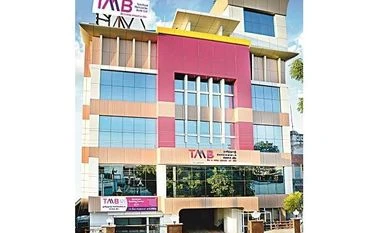 "Tamilnad Mercantile Bank, TMB")
premium
TMB’s management, now busy meeting lead managers and investors, is confident of getting a good valuation principally because it has managed to insulate the bank’s performance from the controversies
6 min read Last Updated : Feb 11 2021 | 6:10 AM IST
Hundred-year old Tamilnad Mercantile Bank (TMB), which has been at the centre of an internal feud for nearly two decades, is gearing up for an initial public offering (IPO) later this year. Is this undue optimism on the part of a small, conservative bank roiled by warring shareholders and little known outside its home state?
In fact, the IPO is seen as a way of ending the dispute by opening the exit door for some investors even as it allows for price discovery for existing shareholders, most of whom are businesspeople. TMB’s management, now busy meeting lead managers and investors, is confident of getting a good valuation principally because it has managed to insulate the bank’s performance from the controversies (see table).
The nine months ended December, which has been challenging for the banking industry as a whole, saw TMB’s profit rise 73 per cent to Rs 422.35 crore from Rs 243.49 crore in the same period a year ago. Gross NPAs dropped to 3.24 per cent from 5.16 per cent and net NPAs to 0.92 per cent against 2.13 per cent in the same time period.
“TMB is one of the strongest banks with enviable performance ratios in the industry,” said Kumarpal R Chopra, corporate lawyer & partner of Mitraa Legal, which advises several funds and high net worth individuals on investments in India.
Although almost 95 per cent of TMB’s shareholders have approved the IPO, issues relating to shareholding and ownership of the bank will remain the key to its success.
TMB was formerly known as the Nadar Bank (it was renamed in 1962) and is exclusively owned by and servicing that community since it was set up in 1920. The dispute began in 1984 when some shareholders sold nearly 67 per cent of the shareholding to the Essar group, which in turn sold it to C Sivasankaran, the maverick NRI businessman and promoter of the Sterling Infotech group.
Sivasankaran was building investments in India’s newly opened telecom and infotech sectors at the time, but he faced stiff resistance from the original shareholders who were unwilling to admit outsiders. The Nadar community went on a fund-raising drive to buy back Sivasankaran’s shares but could not mobilise enough money to buy the entire stake.
Eventually, in 2007, Ramesh Vangal, the man who brought Pepsi to India, got into the act, with his Katra Holdings heading a foreign investors’ consortium to buy out Sivasankaran’s stake. The Katra consortium acquired a 24.93 per cent stake, and another 8.62 went back to the Nadar community.
In 2011, Katra Holdings sold a 3.6 per cent share to Subcontinental Equities, an arm of the Standard Chartered Bank. This proved a problematic deal and in September last year, Standard Chartered was slapped with a Rs 100 crore fine for violating the Foreign Exchange Management Act (FEMA). MGM Maran, former TMB chairman, was fined Rs 35 crore for the same transgression.
The investigation under FEMA was taken up following a reference made by the Reserve Bank of India, which wanted scrutiny of advance remittances received by certain entities for the purchase of TMB shares through an escrow mechanism maintained with Standard Chartered in Mumbai.
Some of the cases are pending in court and with various regulators. But TMB’s former non-executive chairman, S Annamalai, who spearheaded the board for four years from 2016, says those controversies did not disrupt the bank’s performance. He and another five promoters, who together hold around 20 per cent in TMB, have been on the board since 2016. Annamalai is the older brother of S Ashok, who brought foreign investors and the Nadar community together.
“When we took over, we said we will focus only on the bank’s performance and what is best for all the stakeholders, including customers, employees and shareholders,” said Annamalai.
In 2017, the board appointed former United Bank of India (UBI) Executive Director K V Rama Moorthy as managing director. He came with over three decades of experience.
One of the initial decisions the new management took was to stay away from consortium lending. The decision was taken after the board found that its non-performing assets were largely due to consortium lending, which was taking a toll on profits. Instead, the focus was to be on the bank’s strengths — retail, agriculture and MSME, or RAM as they called it.
The change in strategy slowed the bank for a year or two, but the management was vindicated by the experience of peers such as Lakshmi Vilas Bank, which was recently merged with Singapore-owned DBS Bank after mounting NPAs due to high corporate exposure nearly pulled it under.
“We have no regrets saying no to big-ticket lending,” said Annamalai, pointing out that medium and small enterprises are easy to monitor and risk is also lower.
Moorthy added that RAM used to account for around 71 per cent of TMB’s loan portfolio in 2016-17; it has increased to 86 per cent. “Being a commercial bank, one cannot stay away from corporate lending, we choose select mid-size corporations depending on performance, books, viabilities and relationship,” he said.
One of the decisions Moorthy took early on was to make branches build relationships with customers, a critical approach since many customers had been with the bank through four generations.
He also created 107 “clusters”, each with about six people, including one from the regional office, people from branches with expertise or specialists in verticals such as mobilising deposits, retail banking, developing alternate channels and recovery.
“Initially, employees were reluctant. Then they realised what it means to take ownership for the sake of the bank and for their own growth,” he said. As on March 31, 2017, out of the
505 branches, 116 were loss-making. By March 31, 2020, only 48 (of the 509 branches) were making losses.
The bank has set a target to double its balance sheet to Rs 1.25 trillion and more than double profit to Rs 1,000 crore in five years. The IPO will not only strengthen its capital base but also help it expand in Tamil Nadu, which is the one of the fastest growing states in the country.
TMB’s management thinks this is a good time to approach the market because of growing investor interest in private banks, which have a better net interest margin than public sector banks (3.4 per cent vs 2.4 per cent). Some of the successful IPOs in the last two years include Fairfax-backed CSB Bank and Equitas Small Finance Bank. But much depends on whether the market values TMB’s performance over its shareholder feud.