Saturday, January 03, 2026 | 09:38 PM ISTहिंदी में पढें
Business Standard
Notification Icon
userprofile IconSearch

Shadow of India-China tussle, high inflation over Nepal elections

About 18 million people are eligible to vote for the 275-member Parliament, as well as the 550 members of seven Provincial Assemblies
Nepal Polls
premium

Agencies
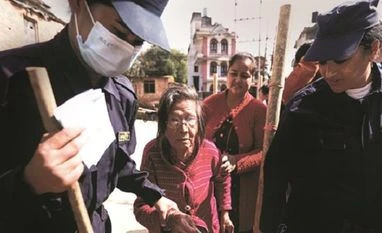
Nepal will hold national and provincial elections on Sunday, which the ruling coalition, led by the centrist Nepali Congress party, are expected to win. About 18 million people are eligible to vote for the 275-member Parliament, as well as the 550 members of seven Provincial Assemblies, through a mix of first-past-the-post and the proportional representation system.

Nepal goes to polls

The upcoming House of Representative (HoR) and Provincial Assembly (PA) elections, set for November 20, have seen an array of professionals from various walks of life as candidates entering politics.

A total of 2,412 candidates

2,187 men and just 225 women – are contesting for 165 of the 275 seats in the House of Representatives under the first-past-the-post (FPTP) system. The remaining 110 members will be elected through proportional representation.

Similarly, 3,224 candidates – 2,943 men, 280 women and one candidate who identifies as the other gender – are hoping to become one of the 330 provincial assembly members under the FPTP system and another 220 through proportional representation.

Key issues that will determine how Nepalis vote

China, India Interest:  Neighbouring China and India will be watching the election results. China has signed infrastructure projects with Nepal under its Belt Road Initiative and envisages to link Kathmandu with Lhasa. India has long had strong ties with Nepal. The US is also now a development partner.

Slowing Economy, Inflation Woes: Economic growth has slowed due to food prices and monetary tightening. About one-fifth of country’s people have been hit hard by high inflation — hovering over 8 per cent this year.
There are also fears that a global recession might reduce remittances from Nepalis working overseas.

Promises: Parties have promised to bring down interest rates, provide free medical services, and boost the economy. The Nepali Congress party has promised to create 250,000 jobs every year while the main opposition Communist Unified Marxist-Leninist (UML) pledged to create 500,000 jobs every year.

Main Contestants: PM Sher Bahadur Deuba (pictured top) has allied with the Maoist Centre party. He is seeking to return to power for the sixth time. UML-led by 70-year-old KP Sharma Oli, is in a loose alliance with a royalist group. Oli, known for his pro-Beijing stance during previous terms, is favourite for the prime minister if his alliance wins