


737 concerns
DGCA's decision to ground planes is appropriate
 "Boeing, 737 Max flights")
premium
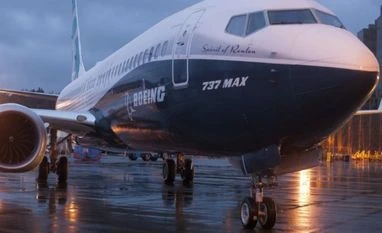
A Boeing 737 MAX sits outside the hangar during a media tour of the Boeing 737 MAX at the Boeing plant in Renton, Washington
3 min read Last Updated : Mar 13 2019 | 12:24 AM IST
The crash on Sunday of an Ethiopian Airlines Boeing 737 MAX 8 airliner flying from Addis Ababa to Nairobi, killing all 157 people on board, has sent shock waves through the aviation community. The crash is unexplained at the moment.
The aircraft was new, less than six months old; and it was being flown by an experienced pilot. Ethiopian itself, a member of the Star Alliance, which includes Air India, is a well-respected airline with a solid safety record. Worse, this crash comes within a few months of another tragic incident — in October, a Lion Air jet from Indonesia went down, killing 189. That was also a Boeing 737 MAX 8, the latest version of the venerable aircraft. Concern has begun to spread about the planes, about 350 of which are currently in active service. About 40 per cent of them, however, have been grounded in the past few days while more information is built up about the crashed planes. Ethiopia, Australia and Singapore were among the first to ban the aircraft, alongside the civil aviation authority of the People’s Republic of China — the market where about 20 per cent of Boeing jets are sold. Multiple other countries, such as India, the UK, Germany, France, Argentina, Malaysia and South Korea, have taken similar decisions, while in some cases airlines — such as Aeromexico and South Africa’s Comair — have taken a decision on their own to ground their 737 MAX 8s. Other airlines, however, are holding out, including some of the biggest purchasers of the 737 MAX 8s — the US’ Southwest and American Airlines, and flydubai. Boeing’s share price has, naturally, suffered.
Concerns about the MAX 8 have the potential to severely hamper the growth of the sector. While only 350 have been delivered so far, there are over 4,500 orders in place — the 737 MAX 8 is likely to be the medium-haul workhorse just as its predecessors were of the past. It is essential for Boeing to work closely with national regulators and airlines to work out if there is a problem and, if so, how to fix it. Matters have reached the point where, if a perception takes hold that this jet is unsafe, it will be very difficult to get passengers to fly on one. Transparency and swift action are therefore essential.
In India, SpiceJet and Jet Airways have the new variant 737s, although Jet Airways — which in any case, thanks to other troubles, has grounded part of its fleet — has said it is not flying any of them at the moment. After grounding the planes, the Directorate General of Civil Aviation has said its decision will remain in force till appropriate modifications and safety measures are undertaken to ensure their safe operations. It is a wise decision, even though it comes after the aviation regulator’s inexplicable statement earlier in the day that it sees no immediate cause for concern. That kneejerk reaction was perhaps a result of the backlash after the National Front government in 1990 grounded the Airbus 320 in Indian Airlines’ fleet after a crash, only to be later forced to reintroduce the planes into the fleet. However, better sense has finally prevailed in the face of growing public concern.