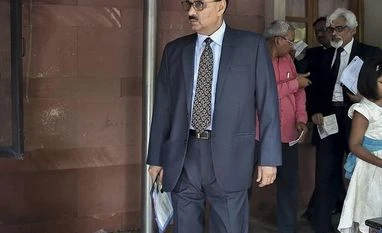
However, a closer reading of the judgment shows that the apex court has scrupulously avoided passing an opinion on the controversy between Messrs Verma and Asthana, which involved a dramatic midnight raid on the CBI headquarters. It has not, for instance, ruled on Common Cause’s petition seeking the removal of Mr Asthana and the constitution of a special investigating team to examine corruption charges against him and CBI officials, including an FIR filed by Mr Verma. Instead, the apex court has focused on a strict interpretation of two laws that govern the terms of the CBI director’s appointment and dismissal. The thrust of the Supreme Court’s judgment is that neither the Central Vigilance Commission (CVC), which oversees the CBI’s functioning, nor the Department of Personnel and Training (DoPT) is competent to order Mr Verma’s transfer under the terms of the CVC Act and the Delhi Special Police Establishment Act, which created the CBI. In reviewing the judicial history of the formation of the CVC and the CBI, the court pointed out that, among other things, the CBI director would be identified by a selection committee, have a minimum tenure of two years and, critically, could be transferred “in an extraordinary situation”, only by the endorsement of the selection committee. In the court’s words, therefore, it has raised a “pure question of law answerable on application of known and established principles of law”.
Predictably, the judgment has not entirely pleased either party. Though the ruling has sent out an unambiguous message to a government that has demonstrated scant respect for institutions these past four years, there are questions as to why Mr Verma’s powers have been curtailed and the three lost months of tenure not restored to him (he has 21 days to go before his term officially ends). The court ruled that Mr Verma could not take “policy decisions”, but conduct routine affairs. Many have chosen to interpret this as enabling Mr Verma to start fresh investigations. Given that Mr Verma still has to run the gauntlet of a selection committee hearing, this is unlikely. Even this sharp rap on the knuckles for the government by the judiciary, however, does not detract from the tawdry power play of this current controversy, nor has it restored the credibility of the CBI. In that sense, Prashant Bhushan, who appeared for the petitioners, offered an apt metaphor in describing the ruling: “Operation successful but patient crippled.”


 "Alok Verma")