


Beyond Bali
India's presidency must make G20 more relevant
 "G20 India")
premium
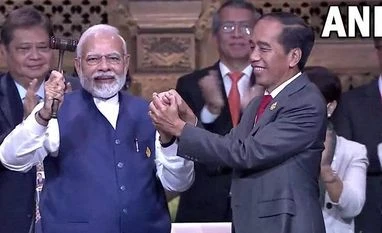
President of Indonesia Joko Widodo hands over the G20 Presidency to India at the closing ceremony of the Bali Summit
Predictably, the Ukraine war and its fallout dominated events at the G20 summit in Bali, with disagreements reportedly delaying the wording of the final declarations. The differences reflected global alignments on the issue, with some countries reaffirming their national positions — as expressed earlier at the United Nations Security Council —in opposing moves by the US and the EU to condemn Russia for the invasion of Ukraine. On November 15, the leaders of US, Europe, Japan and the UK met on the margins of the summit and released a strongly worded statement condemning “the barbaric missile attacks that Russia perpetrated on Ukrainian cities and civil infrastructure”. In the end, the joint declaration reflected those dichotomies with the paragraph on the war underlining member-countries’ positions expressed at the UN Security Council and other fora, but “deploring in the strongest terms the aggression by the Russian Federation against Ukraine” and demanding “its complete and unconditional withdrawal from the territory of Ukraine”. The statement also reiterated the G20’s commitment to international law and the need to search for peaceful resolution of conflicts through dialogue and diplomacy. In a hat-tip to India’s assumption of the G20 presidency, the paragraph ended with Prime Minister Narendra Modi’s statement to Russian President Vladimir Putin at the Shanghai Cooperation Organisation earlier this year that, “Today’s era must not be of war”.