


Brexit's tangled webs: A protection from no-deal exit, but little else
Saturday's vote stipulated that British Parliament would withhold approval to the PM's deal until the Bill for implementing Brexit had been passed
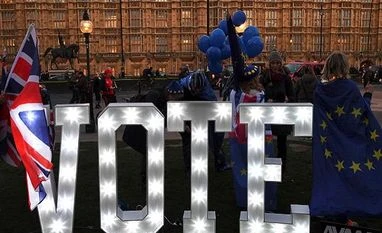 "Brexit")
premium
Photo: Reuters
A third postponement and the spectacle of a prime minister declining to sign a letter requesting a legally binding deferment and sending Brussels a separate signed letter explaining why an extension was bad for both the UK and the European Union (EU), underline the increasingly tangled web that is the Brexit process. The British Parliament, meeting on a Saturday (October 19) for the first time in 37 years, has punctured hopes of settling the vexed issue of the terms of Britain’s withdrawal from the EU. After the financial markets’ hopeful euphoria last week, British MPs voted 322 to 306 to thwart the deal that Prime Minister Boris Johnson had negotiated with the EU. Saturday’s vote, moved by an expelled Tory minister Oliver Letwin, stipulated that Parliament would withhold approval of the PM’s deal until the Bill for implementing Brexit had been passed. The Letwin amendment sought to forestall the possibility of an approval of Mr Johnson’s deal being followed by a failure to pass the Withdrawal Bill, which could have provided the PM with an opportunity to fulfil his openly stated wish to pull the UK out of Europe without a deal. Although the Benn Act of September mandated against that possibility, it says much for Parliament’s lack of trust in Mr Johnson that it thought fit to pass more legislation to ensure this does not occur.
Topics : Brexit European Union Boris Johnson