


Dodging a bullet?
2019-nCoV is a reminder that we must build the foundations of public health
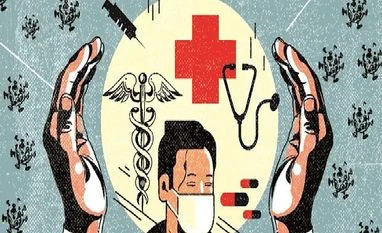 "syringe,doctor, coronavirus")
premium
A newly identified virus, 2019-nCoV, has killed over 800 people worldwide. We do not know whether this will now subside, or whether it will become more important. If there is an outbreak in India, this could have a significant adverse impact on the country and test the public health system. Public health functions on communicable disease are critical functions in a society, which only a state can provide. Such tasks are more important than curative health care, in the agenda for public policy.
The new coronavirus, 2019-nCoV, is similar to the SARS-CoV, which originated in China in 2002. In that episode, which roiled the world economy, 8,096 persons were affected and 774 died, with a case fatality ratio of about 10 per cent. While the new 2019-nCoV appears to be less virulent than SARS-CoV, we have crossed 813 deaths. Of these, 811 were in China, and one each was in Hong Kong and the Philippines. 2019-nCoV is more important for the world economy, than SARS-CoV was, for two reasons: The death toll has exceeded that of SARS-CoV, and the Chinese economy in 2020 is more important for the world than it was in 2002.
In the field of public health, dealing with communicable diseases and epidemics is of primal importance. Governments add value by doing things that are not done by private persons. Fighting communicable disease and responding to epidemics is clearly an area where private responses do not suffice, but where governments are required.
The toolkit of fighting communicable disease in the 21st century has not changed much compared with the 19th century. It involves detective work in watching disease all over the country and obtaining early warnings about epidemics. It involves administrative interventions to contain the spread of an epidemic. Intellectual leadership is required for understanding each new problem, and extension functions are required to communicate this to the health care industry, most notably inside the hot zone.
There is a great deal of humdrum work, which has to be done every day, in the process of obtaining information and analysing it. A large number of false alarms have to be diligently tracked down and ruled out. And then there are occasional crises, like the plague outbreak in Surat in 1994, which require mobilising a full-blown response.
The new coronavirus, 2019-nCoV, is similar to the SARS-CoV, which originated in China in 2002. In that episode, which roiled the world economy, 8,096 persons were affected and 774 died, with a case fatality ratio of about 10 per cent. While the new 2019-nCoV appears to be less virulent than SARS-CoV, we have crossed 813 deaths. Of these, 811 were in China, and one each was in Hong Kong and the Philippines. 2019-nCoV is more important for the world economy, than SARS-CoV was, for two reasons: The death toll has exceeded that of SARS-CoV, and the Chinese economy in 2020 is more important for the world than it was in 2002.
In the field of public health, dealing with communicable diseases and epidemics is of primal importance. Governments add value by doing things that are not done by private persons. Fighting communicable disease and responding to epidemics is clearly an area where private responses do not suffice, but where governments are required.
The toolkit of fighting communicable disease in the 21st century has not changed much compared with the 19th century. It involves detective work in watching disease all over the country and obtaining early warnings about epidemics. It involves administrative interventions to contain the spread of an epidemic. Intellectual leadership is required for understanding each new problem, and extension functions are required to communicate this to the health care industry, most notably inside the hot zone.
There is a great deal of humdrum work, which has to be done every day, in the process of obtaining information and analysing it. A large number of false alarms have to be diligently tracked down and ruled out. And then there are occasional crises, like the plague outbreak in Surat in 1994, which require mobilising a full-blown response.
Illustration by Ajay Mohanty
Disclaimer: These are personal views of the writer. They do not necessarily reflect the opinion of www.business-standard.com or the Business Standard newspaper
Topics : Coronavirus public health Chinese economy