


Indo-US ties: Sailing into choppy waters
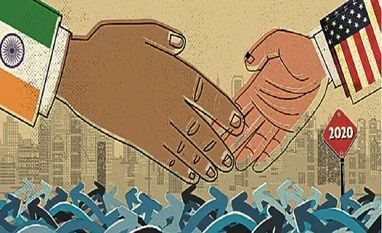
Questions over India's democratic stability and economic upturn will weigh on the ties between the two countries in 2020
 "Chart")
premium
What is the outlook for the Indo-US tie in 2020? The upswing in the relationship that was highlighted by the signing of the civilian nuclear deal in 2008 started abating when Donald Trump became president of the US in 2017. Economic progress was the outstanding reason why India went up in America’s estimation after 1991. Its high growth rates over a 15-year period persuaded Washington to believe that it could become a counterpoise to rising authoritarian China. Additionally, India’s stability as a multicultural democracy also impressed the US, especially after the collapse of the authoritarian Soviet Union and Yugoslavia in 1991.
By 2019, however, it was obvious to the world that India’s economy had fallen into decline over the last six years. Moreover, political and social polarisation, symbolised by increasing communal violence since 2014 and the large-scale protests over the Citizenship Amendment Act (CAA) have raised questions about the quality of its democracy.
The economic downturn and New Delhi’s ruling out of a quick recovery brings into question India’s ability to counter China in Mr Trump’s “Indo-Pacific”. Over the last decade, India and the US have signed more than $15 billion worth of arms deals — and Washington recently offered India another $1 billion worth of naval guns. But to New Delhi’s chagrin, the US still refuses to transfer sensitive military technology because India is not a formal ally. While sovereignty decrees that India has a right to buy Russia’s S-400 missile, this air defence system blocks closer military ties with the US, which sees Russia as a security threat. If the absence of an alliance reflects India’s determination to uphold its strategic autonomy, it simultaneously makes Washington doubtful about the viability of the Indo-US tie.
Trade issues are another sticking point in their tie. India’s cat’s cradle of red tape and protectionist tariffs irk Washington. They take the sheen off India as a trading partner. A mere 2.1 per cent of US exports come to India; and 2.2 per cent of imports come from India. Fifteen per cent of India’s imports come from the US, 16 per cent of its exports go to the US.
As India’s economy has taken a nosedive, China has shown off its economic progress by expanding its Belt and Road Initiative (BRI) worldwide. Several member-states of the European Union and all of India’s neighbours have joined the BRI. China’s financial clout has established it as the largest investor in their economies. It is also the largest arms seller to Myanmar and Bangladesh. Its growing presence in the Indian Ocean poses tough queries about India’s standing as the dominant South Asian power.
The other domestic development — the passing of the CAA and the large-scale protests that it provoked — have led many in the US to question India’s secular democratic credentials. Even before that, the State Department in June reported that religious intolerance in India had grown under Prime Minister Narendra Modi's government. India predictably riposted that a foreign government had “no right” to comment on the country's internal affairs.
At December’s 2 +2 dialogue in Washington, US Secretary of State Mike Pompeo said that the US cared deeply about protecting minorities and religious rights everywhere. He voiced confidence in the Indo-Pacific partnership, as being grounded in democratic values.
By 2019, however, it was obvious to the world that India’s economy had fallen into decline over the last six years. Moreover, political and social polarisation, symbolised by increasing communal violence since 2014 and the large-scale protests over the Citizenship Amendment Act (CAA) have raised questions about the quality of its democracy.
The economic downturn and New Delhi’s ruling out of a quick recovery brings into question India’s ability to counter China in Mr Trump’s “Indo-Pacific”. Over the last decade, India and the US have signed more than $15 billion worth of arms deals — and Washington recently offered India another $1 billion worth of naval guns. But to New Delhi’s chagrin, the US still refuses to transfer sensitive military technology because India is not a formal ally. While sovereignty decrees that India has a right to buy Russia’s S-400 missile, this air defence system blocks closer military ties with the US, which sees Russia as a security threat. If the absence of an alliance reflects India’s determination to uphold its strategic autonomy, it simultaneously makes Washington doubtful about the viability of the Indo-US tie.
Trade issues are another sticking point in their tie. India’s cat’s cradle of red tape and protectionist tariffs irk Washington. They take the sheen off India as a trading partner. A mere 2.1 per cent of US exports come to India; and 2.2 per cent of imports come from India. Fifteen per cent of India’s imports come from the US, 16 per cent of its exports go to the US.
As India’s economy has taken a nosedive, China has shown off its economic progress by expanding its Belt and Road Initiative (BRI) worldwide. Several member-states of the European Union and all of India’s neighbours have joined the BRI. China’s financial clout has established it as the largest investor in their economies. It is also the largest arms seller to Myanmar and Bangladesh. Its growing presence in the Indian Ocean poses tough queries about India’s standing as the dominant South Asian power.
The other domestic development — the passing of the CAA and the large-scale protests that it provoked — have led many in the US to question India’s secular democratic credentials. Even before that, the State Department in June reported that religious intolerance in India had grown under Prime Minister Narendra Modi's government. India predictably riposted that a foreign government had “no right” to comment on the country's internal affairs.
At December’s 2 +2 dialogue in Washington, US Secretary of State Mike Pompeo said that the US cared deeply about protecting minorities and religious rights everywhere. He voiced confidence in the Indo-Pacific partnership, as being grounded in democratic values.
Disclaimer: These are personal views of the writer. They do not necessarily reflect the opinion of www.business-standard.com or the Business Standard newspaper
Topics : Indo-US ties Donald Trump Citizenship Act