


Learning from the classroom
Govt schools need to focus on quality
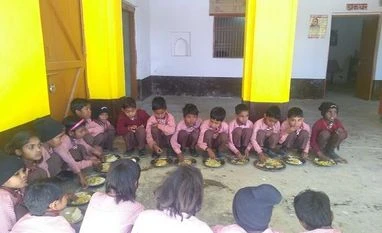 "Students gather around for their mid day meal at the primary school in Jayapur")
premium
Students gather around for their mid day meal at the primary school in Jayapur
Over the past decade, successive governments have taken pride in the fact that growing numbers of children in rural India are being enrolled in schools and, what is more, staying there for longer periods of time. In a country as large and geographically varied as India, this is no mean achievement. The disheartening factor is that no government has chosen to build on this initiative in a meaningful manner. The unintended consequence of this “quantitative” focus has been to downplay the “qualitative” element, as the latest Annual State of Education (Rural) or ASER report shows. ASER surveyors visited some 37,000 children between the ages of four and eight in 26 rural districts in 24 states. The results suggested that government schools fared considerably worse in terms of the quality of education. For instance, less than half (46.8 per cent) of students in government primary schools can read letters of the alphabet compared with 77 per cent in private schools. Worse, for a country that prides itself on its information technology talent, only 54.4 per cent of children in government schools can recognise number one through nine compared with 82.7 per cent in private schools.