


Lessons from 2019
Election schedule needs shortening
 "Lessons from 2019")
premium
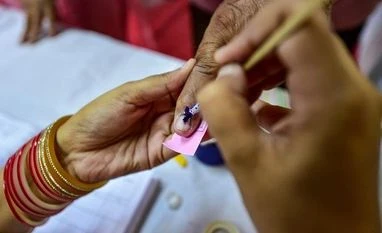
A polling officer puts indelible ink mark on the finger of a voter during the sixth phase of the 2019 Lok Sabha elections | PTI
Till recently, election fatigue was a term associated with the United Kingdom, where the electorate faced two general elections and one momentous referendum on Brexit in the space of just two years, apart from sundry local elections. In 2019, it is fair to say that India has reached that stage in a little over a month, thanks to a seven-phase election schedule. The diminishing enthusiasm is evident in the progressive dip in voter turnout: 69.5 and 69.4 in phases one and two, respectively, to 68.4 per cent in phase 3; 65.5 per cent in phase 4; 65 per cent in phase 5 and 63 per cent in phase 6. This makes for a rough turnout average of 66 per cent — comparable to the turnout in the record-setting nine-phase election of 2014. But considering that the registered electorate has swelled from 814.5 million voters in 2014 to nearly 900 million, and the issues at stake are no less consequential, it was reasonable to have expected a larger turnout. It is possible that voter ennui will change in the last phase, on May 19, but the contrast with the excitement of 2014 is palpable. The big takeaway from the 2019 elections, then, is the importance of shortening the schedule.