At a broader level, this episode highlights several economic and governance challenges that India is facing in its attempt to grow rapidly with increasing urbanisation. However, the issue of externality is not new and, in the Kanpur tanneries case, pollution of the Ganga has wider consequences. Economists have been debating such problems for at least about a century. The issue was first raised by Alfred Marshall and taken forward by Arthur Pigou. In his book, The Economics of Welfare, first published in 1920, Pigou noted: “...self-interest will not…tend to make the national dividend a maximum; and, consequently, certain specific acts of interference with normal economic processes may be expected, not to diminish, but to increase the dividend.” Pigou discussed various ways of intervention, popularly known as the Pigouvian tax. A carbon tax, for instance, is a good example of such an intervention. However, there has been criticism of Pigouvian tax over the years because, for example, it is not easy to measure social costs.
India needs to tackle negative externalities of industrial development and rapid urbanisation at various levels. Imposing taxes may not always work in containing pollution and damage to the environment. Despite all the efforts made by the government, a large amount of sewage water is still being released into the Ganga in Uttar Pradesh. This along with the case of tanneries in Kanpur shows that India needs to build state capacity to deal with such issues. Tanneries have been closed because a state agency could not handle the project properly. Dealing with pollution will not only require empowering the institutions of local governance but will also need better coordination among different agencies. Engagement of local institutions is necessary as one-size-fits-all solutions may not work in a country like India. Essentially, the state should be in a position to make the necessary investment and monitor the adherence to environment regulations at the local level. The government would do well to attract private investment in waste management in a big way, which will help bring innovation and minimise costs over time.
The challenge of containing pollution will only rise and the government will need to work at multiple levels to ensure that growth and development are sustainable, and closure of industrial units doesn’t become a default option.


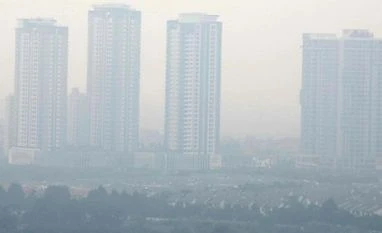 "Pollution. Photo: Reuters")