


Champions Trophy: Is Indian hockey's latest batch the best in a long while?
The Champions Trophy saw India display flair and tenacity in plenty - with a homegrown coach in charge.
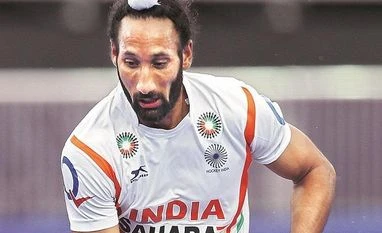 "Sardar Singh")
premium
A young Indian team at the Champions Trophy hugely benefited from the return of Sardar Singh
Underdog spirit evokes a strange sense of oneness among watchers of sport. And an underdog victory generally translates into a feat befitting the very acme of sporting romanticism. An underdog defeat, on the other hand, mostly sparks a sad consternation, “they-surely-deserved-better” stuff. A rare, brilliantly engrossing exhibit last Sunday managed to simultaneously capture these dualities.
Russia withstood a pass assault — 1,114 genteel ones, to be precise — by Spain’s latest troop of twinkle-toed danseurs and eventually prevailed on penalty kicks in the football World Cup. In Champions Trophy hockey, India ran Australia ragged with a speed and skill that we scarcely thought they were capable of, only to shockingly disintegrate in the shootout.
If Spain’s performance, in the words of the innovative Barney Ronay in The Guardian, was “dinner jazz football — nifty, neat, but also apparently without end”, India’s was like a boy band belting out hits from its first album at a teenage birthday party: original, refreshing, every bit encore-worthy. Both lost — one rather deservedly, the other less so.
“This is the best I’ve seen India at a major tournament in a long time. Generally, we play well in a couple of games and are terrible in the rest. This time, the consistency was remarkable,” notes former national team captain Viren Rasquinha, the most articulate of India’s hockey brains. “In the final, despite playing so well, it just didn’t happen.”
Before the tournament in Breda, the Netherlands, any suggestions that India would be able to stand up to the might of Australia — or any of the other top dogs for that matter — were naturally dismissed. India vs Australia on a hockey field, after all, is one of the great mismatches of modern sport. Eight years ago, on a brutally sultry New Delhi afternoon, I braved the front-row horror of watching India ship eight against the Aussies in the final of the Commonwealth Games. Since 2010, India has beaten them only seven times in 37 attempts. Sunday was another failed one, but it reflected a kind of stick symphony we were convinced bore the tag of extinction. Australia never looked so vulnerable. And while possibly a tad premature, it wouldn’t be unfair to say that this is perhaps India’s finest team in recent memory.
“There were so many excellent young players who really shone through in Breda. Plus with the seniors coming back, it was the perfect combination,” feels Joaquim Carvalho, former international and national coach.
At the end of the Commonwealth Games in April, where the team finished a disappointing fourth, the national set-up resembled a broken family. The prelude to the Games had seen coach at the time, Dutchman Sjoerd Marijne, leave out a bunch of seniors — most notably, former captain Sardar Singh — that led to an imbalance and disjointedness that eventually proved impossible to overcome at the Gold Coast.
For the Champions Trophy, Marijne’s successor, the ever-sharp Harendra Singh, successfully restored order in the house, recalling Sardar, Surender Singh and Birendra Lakra, and thereby infusing the stability lacking in campaigns past. “All three were excellent and made a massive difference,” says Rasquinha.
Russia withstood a pass assault — 1,114 genteel ones, to be precise — by Spain’s latest troop of twinkle-toed danseurs and eventually prevailed on penalty kicks in the football World Cup. In Champions Trophy hockey, India ran Australia ragged with a speed and skill that we scarcely thought they were capable of, only to shockingly disintegrate in the shootout.
If Spain’s performance, in the words of the innovative Barney Ronay in The Guardian, was “dinner jazz football — nifty, neat, but also apparently without end”, India’s was like a boy band belting out hits from its first album at a teenage birthday party: original, refreshing, every bit encore-worthy. Both lost — one rather deservedly, the other less so.
“This is the best I’ve seen India at a major tournament in a long time. Generally, we play well in a couple of games and are terrible in the rest. This time, the consistency was remarkable,” notes former national team captain Viren Rasquinha, the most articulate of India’s hockey brains. “In the final, despite playing so well, it just didn’t happen.”
Before the tournament in Breda, the Netherlands, any suggestions that India would be able to stand up to the might of Australia — or any of the other top dogs for that matter — were naturally dismissed. India vs Australia on a hockey field, after all, is one of the great mismatches of modern sport. Eight years ago, on a brutally sultry New Delhi afternoon, I braved the front-row horror of watching India ship eight against the Aussies in the final of the Commonwealth Games. Since 2010, India has beaten them only seven times in 37 attempts. Sunday was another failed one, but it reflected a kind of stick symphony we were convinced bore the tag of extinction. Australia never looked so vulnerable. And while possibly a tad premature, it wouldn’t be unfair to say that this is perhaps India’s finest team in recent memory.
“There were so many excellent young players who really shone through in Breda. Plus with the seniors coming back, it was the perfect combination,” feels Joaquim Carvalho, former international and national coach.
At the end of the Commonwealth Games in April, where the team finished a disappointing fourth, the national set-up resembled a broken family. The prelude to the Games had seen coach at the time, Dutchman Sjoerd Marijne, leave out a bunch of seniors — most notably, former captain Sardar Singh — that led to an imbalance and disjointedness that eventually proved impossible to overcome at the Gold Coast.
For the Champions Trophy, Marijne’s successor, the ever-sharp Harendra Singh, successfully restored order in the house, recalling Sardar, Surender Singh and Birendra Lakra, and thereby infusing the stability lacking in campaigns past. “All three were excellent and made a massive difference,” says Rasquinha.
A young Indian team at the Champions Trophy hugely benefited from the return of Sardar Singh