


From western dominance to multipolarity: China and India at the core
Mr Cable eschews the general narrative of China and India being different, highlighting instead their similarities
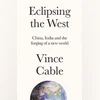 "Eclipsing the West: China, India and the forging of a new world")
premium
Eclipsing the West: China, India and the forging of a new world
4 min read Last Updated : Jan 22 2026 | 12:51 AM IST
Listen to This Article
Eclipsing the West: China, India and the forging of a new world
By Vince Cable
Published by Manchester University Press
352 pages ₹2,639
Vince Cable’s book Eclipsing the West: China, India and The Forging of a New World is a comparative analysis of China and India. The author terms them “superstates” and argues that the “emergence of China and India as superstates, combined with the relative decline of the US and the weakening of global rules and institutions this entails, presents some serious geopolitical challenges.” The major analysis of the predicted world order is done by invoking the Thucydides Trap and the Kindleberger Trap. A look at the expected future is attempted through an analysis of three most probable scenarios.
Mr Cable eschews the general narrative of China and India being different, highlighting instead their similarities. Their economic growth, he says, would be one of the most crucial factors in the changing geopolitical scenario. Both, he asserts, are driven by “state capitalism”, explaining that in both economies the exact share of the public and private enterprises is not very clear and they tend to overlap. Another major similarity today is ideology, which has come in handy for both governments to maintain control over large nations. The author shrewdly opines that the “Chinese one-party rule and India’s parliamentary democracy are different political animals. But crucially, what both have in common is an understanding that their ideology and its expression through a strongman ruler are difficult to reconcile with liberal democracy.”
In the last few years, however, both countries have been struggling to achieve their economic targets. Chinese growth has been on a decline after years of double-digit growth and India has been struggling to reach major growth levels. The general global slowdown following the Covid-19 pandemic is one major factor, but there are major domestic factors at play too. The author explains this when he writes, “Both Modi and Xi have lost their aura as Development Men: Modi at the ballot box, Xi through the many signs of economic stress. In Modi’s case it is clearer what must be done to recapture earlier popularity: to focus on job creation and poverty reduction in an otherwise healthily growing economy. With Xi, the problems are serious and the solution less obvious”.
Mr Cable discusses the rise of new superstates and the upcoming changes in the geopolitical order and this becomes even more interesting given the recent developments vis-à-vis the United States and Venezuela. The act of regime change by the US underscores the notion of a weakening international rules-based order and also warrants a new look at the idea of deterrence. The author hints at this. “In the case of the USA, there is the question of how the country will react to seriously diminished relative power and prestige. The MAGA phenomenon does not suggest an acceptance of genteel decline. It may accelerate it.” The fact that the US announced its withdrawal from 66 United Nations (UN) and non-UN bodies adds to the imponderables about the international system. Mr Cable predicts the rise of a multipolar world order, which will indicate a relative decline of the supremacy of the US. But he also adds a note of caution: “Multilateralism does not require heroic idealism. It does require enlightened realism”.
The author also discusses the role of the superstates with respect to global goods such as climate change, security and the liberal international economic order. But, expectedly perhaps for a Western analyst, he places the onus of managing climate change on developing economies like China and India — oblivious to the historical responsibility of the US and Europe. He writes, “If the public good of managing climate change is to be realised, it will depend on China, and to a growing degree India, assuming global leadership”.
For all the complementarities, Mr Cable is aware that China and India are “frenemies” rather than instinctive allies. “Economic growth projections to 2050 suggest that China and India are both likely — though not certain — to become pre-eminent economic powers, perhaps even surpassing the USA”. Though the author argues that, “…it should not be assumed that China’s relationship with India is locked into a downward spiral.” He asserts that India and China can shape future geopolitics, the centrality of the unresolved border issue to upset this dynamic cannot be underestimated. China and India have been cooperating on multiple issues — among them, technology, renewables and the shift from the dollar. But sovereignty remains the driving force. Even when aware of the benefits of cooperation, mistrust has driven this relationship for the last 75 years and genuine cooperation seems elusive in the near future too.
The reviewer is associate professor, O P Jindal University
Topics : BS Reads Book Book reading BOOK REVIEW Reading