


Political Pulse: What the Budget 2026 means for four poll-bound states
Finance Minister Nirmala Sitharaman stressed youth-led growth, SME capacity building and region-specific measures, seeking to address trade challenges while signalling outreach to poll-bound states
 "Nirmala Sitharaman, Union Budget 2026")
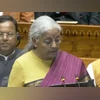
Sitharaman’s response, as she stated in her speech, focused on “people over populism”, and—given the importance of labour-intensive industries and mobility pacts in India’s trade deals—on India’s “Yuva Shakti”, or youth power. (Photo: X/@narendramod
Listen to This Article
One of the challenges that confronted Union Finance Minister Nirmala Sitharaman this time included reaching out to the electorate of the four poll-bound states and a Union territory.
But her response, as she stated in her Budget speech, focused on “people over populism”, and India’s “Yuva Shakti”, or youth power. She did not announce any notable increases in any of the government’s welfare schemes.
But she spoke of measures the government proposes to undertake – measures that will cover the poll-bound states — also for those where the Bharatiya Janata Party (BJP)-led National Democratic Alliance has performed well, for example in the civic polls in Maharashtra, and for states worst hit by American tariffs, including Andhra Pradesh and Tamil Nadu.
She spoke of measures such as spurring capacity building, with a focus on small and medium enterprises, preparing the country and its youth to benefit from the recent trade deals that India has signed, and addressing supply-chain constraints, especially of rare-earth minerals, and offering help to sectors hit by tariffs.
Of the four poll-bound states – Assam, West Bengal, Tamil Nadu, and Kerala – and the Union territory of Puducherry, all of which are slated for elections by April-May, the Bharatiya Janata Party (BJP) hopes to retain power in Assam, and has ambitions to improve upon its previous performances in West Bengal, Kerala and Tamil Nadu.
Also Read

 "pharma")
 "Budget 2026, infrastructure, Budget and Infrastructure, Union Budget")
 "Central tax distribution")
 "Indian Railways")
 "unemployment")
The saree that Sitharaman wore, Kanjivaram silk saree, was a nod to the weaving and textile prowess of her home state, Tamil Nadu. The southern state’s textile sector has suffered because of American tariffs, with Chief Minister M K Stalin having written to the Centre about millions of jobs at risk. The recently concluded negotiations on the India-European trade deal, Indian officials have said, would help labour-intensive sectors, such as textiles.
In her speech, Sitharaman announced the setting up of mega textile parks. Other measures included a “National Fibre Scheme” for self-reliance in natural fibres such as silk, wool and jute, man-made fibres, and new-age fibres, and the Textile Expansion and Employment Scheme to modernise traditional clusters
The Budget announced the extension of the export obligation period from six months to 12 months for exporters of textile garments, leather garments, leather or synthetic footwear and other leather products manufactured using duty-free imported inputs. The measure, officials say, will provide greater operational flexibility, ease of compliance, and improved working-capital management for textile exporters. West Bengal is a hub of leather goods.
With leading member countries of the European Union (EU), such as Germany and Sweden, keen to engage with India’s small and medium enterprises (SMEs), the Budget increased the provision of ₹10,000 crore for the SME Growth Fund, alongside the Self-Reliant India Fund. The India-EU “Comprehensive Strategic Agenda”, unveiled on January 27, envisages “cross-border investment, co-creation, and deep-tech scale-ups between European and Indian SMEs, incubators and start-ups”.
The minister said that in order to promote environmentally sustainable passenger systems, “we will develop seven High-Speed Rail corridors between cities as growth connectors and Hyderabad-Chennai, and Chennai-Bengaluru would be among them”. She said the government proposed to support the mineral-rich states of Odisha, Kerala, Andhra Pradesh and Tamil Nadu to establish dedicated “Rare Earth Corridors” to promote mining, processing, research and manufacturing. She also announced supporting the ecologically sustainable mountain trail in Podhigai Malai in the Western Ghats, which straddles Tamil Nadu and Kerala, bird-watching trails along Pulikat Lake (Andhra Pradesh-Tamil Nadu border) and development of the archaeological site of Adichanallur (in Tamil Nadu).
Sitharaman spoke of cities as India’s engines of growth, innovation, and opportunities, and the government’s intent on focussing on Tier-II and -III cities, and temple towns, which need modern infrastructure and basic amenities. The Budget allocated ₹5,000 crore for city economic regions. The measure could improve urban infrastructure in temple towns in Tamil Nadu, West Bengal, Assam and Kerala. The Budget announced reviving 100 old industrial clusters, which could help such towns in poll-bound states, especially West Bengal, and also Maharashtra.
For West Bengal, the Budget proposed a new dedicated freight corridor linking Dankuni, in Hooghly district, to Surat in Gujarat, an integrated East Coast Industrial Corridor with a major node at Durgapur, the creation of tourism destinations across five Purvodaya states, which includes West Bengal, and provisions for 4,000 e-buses. For Assam, the Budget announced setting up the National Institute of Mental Health and Neurosciences (NIMHANS) in Tezpur, along with Jharkhand’s Ranchi.
For the coastal states, including poll-bound West Bengal, Tamil Nadu and Kerala, the minister said nil duty would be imposed on fish caught in exclusive economic zones (EEZ) and high seas by Indian vessels. Landing such fish at foreign ports will be treated as the export of goods, she said. To promote the inland fishery sector, the government will undertake integrated development of 500 reservoirs and Amrit Sarovars and strengthen the value chain in coastal areas, enabling market linkages through startups, women-led groups and fish farmer producer organisations. It could also help exporters of marine produce, especially of shrimps, particularly from Andhra Pradesh, ruled by the Telugu Desam Party, a key constituent of the National Democratic Alliance, which has been hit because of US tariffs.
In another proposal that could benefit West Bengal and southern states, Sitharaman said: “We will support high-value crops such as coconut, sandalwood, cocoa and cashew in our coastal areas. Agar trees in the North East and nuts such as almonds, walnuts and pine nuts in our hilly regions will also be supported.”
The minister proposed a coconut promotion scheme aimed at replacing old and non-productive trees with new varieties in major coconut-growing states. She said about 30 million people, including nearly 10 million farmers, depended on coconuts for their livelihood. She said tax collection at source (TCS) for tendu leaves would be reduced to 2 per cent. It is a major non-timber forest produce in several states, including West Bengal. For Kerala, apart from the rare-earth corridor, the Budget announced turtle trails along key nesting sites.
The Budget extended by one more year the Pradhan Mantri Cha Shramik Protsahan Yojana, which was introduced for 2024-25 and 2025-26 with an outlay of ₹1,000 crore to provide for the welfare of tea workers, especially women and their children, in Assam and West Bengal. She also announced schemes for developing the Buddhist circuit, including in Assam, and tourism in Purvodaya states.
To strengthen khadi, handloom and handicrafts, the Budget announced the launching of the Mahatma Gandhi Gram Swaraj Initiative. The Congress-led Opposition has been criticising the government for renaming the Mahatma Gandhi National Rural Employment Guarantee Act (MGNREGA), as the Viksit Bharat-Guarantee for Rozgar Aajeevika Mission (Grameen) (VB-G RAM G).
Allocation for Census up almost 6 times
The Budget estimates for 2026-27 earmarked ₹6,000 crore for the Census, Survey and Statistics/Registrar General of India (RGI), which is almost a sixfold increase from the ₹1,040 crore allotted in the revised estimates for 2025-26. The Cabinet had allocated ₹11,718 crore for the exercise.
Nothing for Chabahar port
With the United States slapping fresh sanctions on Iran, the Budget not allocating any funds for the Chabahar port project is significant. In the last few years, India has been making an annual outlay of ₹100 crore to the mega connectivity project.
More From This Section
 "Budget 2026")
 "Long-term capital gains (LTCG) tax on equity funds increased from 10 per cent to 12.5 per cent in the budget while short-term capital gains (STCG) tax increased from 15 to 20 per cent. “While the 33 per cent increase in STCG tax may seem high, it sho")
 "MGNREGA, VB-G RAM G")
 "finance commission")
 "Budget 2026")
Topics : Nirmala Sitharaman Budget 2026 youth MSME SME
Don't miss the most important news and views of the day. Get them on our Telegram channel
First Published: Feb 01 2026 | 8:58 PM IST