


Personal finance and Budget 2025: Key strategies for smart planning
Smart planning can help individuals maximise benefits and achieve long-term financial goals, say experts
 "Nirmala Sitharaman Budget")
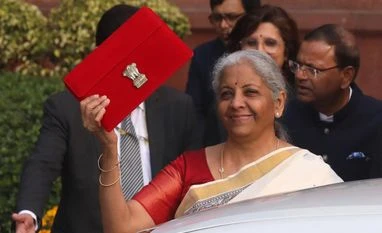
Union Finance Minister Nirmala Sitharaman (Photo: PTI)
Listen to This Article
Finance Minister Nirmala Sitharaman’s Budget speech on Friday introduced changes that will help the middle class save more and stimulate economic activity as a result, said analysts.
Individuals can consider various approaches in their personal finance strategy, they said. “Salaried individuals should focus on optimising their tax liabilities by leveraging deductions, increasing contributions to long-term investment instruments, and diversifying beyond traditional savings into inflation-hedged assets,” said Samir Bhandari, co-founder and chief financial officer of hBits.
“The most striking change in the new tax regime is the removal of Income Tax for those earning up to Rs 12 lakhs, and the revised tax slabs which now see the 30 per cent tax bracket apply only for those earning above Rs 24 lakhs,” said Priyank Shah, co-founder and chief executive officer (CEO) of The Financialist.
Also Read

 "Consumption survey: No definitive trend yet")
 "Startups, Indian startups")
 "Nirmala Sitharaman, Union Finance Minister")
 "Budget")
 "Sitharaman, Budget")
“This means significant savings for middle-class earners. As a result, more and more individuals will likely shift to this new tax regime, as the incentives are strong and appealing. With lower tax liabilities, people now have greater disposable income, which can be used to enhance their financial well-being,” said Priyank Shah, co-founder and CEO of The Financialist.
New Income Tax slabs for 2025-26:
Rs 0-4 lakh: Nil
Rs 4-8 lakh: 5 per cent
Rs 8-12 lakh: 10 per cent
Rs 12-16 lakh: 15 per cent
Rs 16-20 lakh: 20 per cent
Rs 20-24 lakh: 25 per cent
Rs 24 lakh and above: 30 per cent
“Investing in mutual funds is going to become more seamless post this budget with changes in CKYC norms, making it easier for individuals to participate in the markets. For the middle class, particularly those aged 25 to 40, higher disposable income of up to Rs 1.1 lakh could have a dual effect as this will boost both consumption and investments. Today, almost 25 per cent of the taxpayers are in the bracket of 5-12L,” said Feroze Azeez, deputy CEO, Anand Rathi Wealth Limited.
“Key initiatives such as the NPS-Vatsalya scheme and TDS rationalisation will further contribute to long-term financial planning,” said Naik Sheth, KMP Wealth Management Solutions, NPV & Associates LLP.
Financial planning strategies suggested by experts
Budgeting: Create a detailed monthly budget that accounts for new tax exemptions and potential savings. This will help manage expenses effectively while maximising disposable income.
Emergency fund: Establish or bolster an emergency fund that covers at least six months' worth of expenses. This provides a safety net against unforeseen circumstances.
Retirement planning: With tax benefits on retirement savings accounts increasing contributions to retirement funds can enhance long-term financial security.
Health insurance: Given the Budget’s focus on improving health care, investing in comprehensive health insurance plans can safeguard against rising medical costs.
Skill development: As the government focuses on enhancing employment opportunities through skill development programs, investing in education or training can improve job prospects and earning potential.
More From This Section
 "Microfinance, mutual fund")
 "Cigarette, Tobacco, BAT")
 "MK Stalin, Stalin")
 "Droupadi Murmu, Murmu, President")
 "Siddaramaiah, Karnataka CM")
Topics : Budget 2025 Personal Finance
Don't miss the most important news and views of the day. Get them on our Telegram channel
First Published: Feb 01 2025 | 6:54 PM IST