


Rapido to undercut Zomato, Swiggy with 8-15% restaurant commissions
Ride-hailing firms have previously struggled with high costs and thin margins, raising questions about the long-term profitability of the segment as Rapido enters the food delivery space
 "Rapido News")
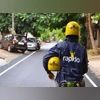
Rapido will launch food delivery services with significantly lower restaurant commissions and flat customer fees, targeting a Bengaluru pilot by July | File Photo
Listen to This Article
Ride-hailing platform Rapido is set to foray into India’s online food delivery market with a disruptive pricing strategy aimed at restaurants. The company plans to offer significantly lower commission rates than current market leaders Zomato and Swiggy.
By undercutting established players, Rapido is looking to attract restaurant partners and challenge the aggregator-driven model that has long defined the industry.
According to a report by The Economic Times, Rapido has agreed on commercial terms with restaurants through a partnership with the National Restaurants Association of India (NRAI). While Zomato and Swiggy typically charge commissions of 16-30 per cent, Rapido’s rates will range from 8-15 per cent, depending on the order value.
The delivery fee model has also been simplified. For orders placed via the Rapido app, customers will be charged ₹25 for orders below ₹400 and ₹50 for those above.
A pilot rollout is expected in Bengaluru by late June or early July. “This will especially help small restaurants,” one executive told The Economic Times, noting that Rapido’s lower commissions could appeal to price-sensitive businesses struggling with high aggregator fees.
Also Read

 "Uber, Noida Airport")
 "Rapido News")
 "uber, uber pets")
Ride-hailing to food delivery: How have competitors fared?
Rapido’s entry comes after multiple attempts by ride-hailing giants to crack the food delivery code, most of which ended in retreat.
Ola, for instance, launched Ola Cafe in 2015, followed by the acquisition of Foodpanda India in 2017. Despite heavy investment, both efforts fizzled out, and by 2019, Ola exited the space due to operational inefficiencies and intense competition.
However, Ola has recently re-entered through the Open Network for Digital Commerce (ONDC), a government-backed digital platform, emerging as a top food-ordering interface. As of mid-2024, Ola was processing 15,000–20,000 orders daily, capturing around a third of ONDC’s demand in metro markets like Delhi-NCR and Bengaluru.
Uber, meanwhile, launched Uber Eats India in 2017 but exited just three years later, selling the business to Zomato in January 2020 in an all-stock deal valued at approximately $206 million. This transaction gave Uber a 9.99 per cent stake in Zomato. It has not returned to the Indian food delivery sector since.
The Zomato-Swiggy duopoly
India’s online food delivery sector remains highly consolidated. As of June 2025, Eternal (formerly Zomato) leads with a market capitalisation of ₹1.95 trillion, according to data from companiesmarketcap.com. Zomato is driven by strong growth from both food delivery and its quick commerce subsidiary, Blinkit. Rival Swiggy, now valued at ₹933.75 billion, has also diversified, launching new services like Scenes, an events and ticketing platform.
Together, Zomato and Swiggy have long maintained a tight duopoly. Whether Rapido can disrupt this established duopoly with its lower commission model remains to be seen.
More From This Section
 "Mounjaro, Eli Lilly")
 "Tata Steel, Tata")
 "Lilavati Hospital")
 "Adani Ports")
 "Sat Pal Bhanoo")
Topics : ride sharing Food delivery BS Web Reports Zomato Swiggy
Don't miss the most important news and views of the day. Get them on our Telegram channel
First Published: Jun 09 2025 | 10:32 AM IST