


Asia Cup, IND vs PAK: ICC sanctions Bumrah, Arshdeep, Surya; Rauf banned
The ICC has handed Haris Rauf a two-match ban after Asia Cup 2025 clashes with India. Suryakumar Yadav and Jasprit Bumrah also sanctioned as tensions marred the tournament.
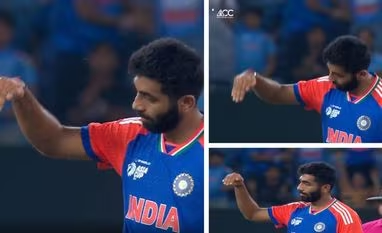 "Jasprit Bumrah plane crash gesture after taking Haris Rauff's wicket")
IND vs PAK final: Jasprit Bumrah's plane crash gesture after taking Haris Rauff's wicket
Listen to This Article
The dust from the fiery Asia Cup 2025 has refused to settle. The tournament that ended with a dramatic India-Pakistan final continues to generate headlines — this time for disciplinary reasons. Pakistan pacer Haris Rauf has been handed a two-match suspension by the International Cricket Council (ICC) after accumulating four demerit points from two separate offences committed during Pakistan’s matches against India on September 14 and September 28.
Rauf’s ban means he will miss the first two ODIs against South Africa in Faisalabad, a setback for Pakistan’s pace attack. The ICC’s verdict, made public on Tuesday, comes weeks after the tournament concluded, adding another layer of intrigue to one of cricket’s most politically charged rivalries.
Why was Rauf suspended?
The fiery pacer was charged twice for breaching Article 2.21 of the ICC Code of Conduct, which deals with “actions that bring the game into disrepute.” Rauf reportedly refused to accept the charges on both occasions, prompting formal hearings that led to the sanctions.
Under ICC regulations, four demerit points within a 24-month period automatically translate into a two-match suspension. His behaviour during India’s matches, according to match officials, crossed the line of acceptable on-field conduct.
Also Read


 "India vs Pakistan Asia Cup final")
India’s players also in the dock
Rauf’s case is part of a wider fallout from the three tense India-Pakistan encounters during the Asia Cup. India captain Suryakumar Yadav received two demerit points under the same article for post-match comments following India’s victory on September 14.
Jasprit Bumrah was also sanctioned, picking up one demerit point for a gesture made during the final. Meanwhile, Sahibzada Farhan received an official warning and one point for his conduct in the same September 14 game.
Arshdeep Singh, charged under Article 2.6 for allegedly using an “obscene or offensive gesture” during the September 21 fixture, was later acquitted after a review found no breach.
When politics met cricket
The three matches between India and Pakistan were marred by rising tempers and gestures that mirrored the diplomatic chill between the two neighbours. India’s refusal to shake hands with Pakistan’s players after each game became a flashpoint. Pakistan captain Salman Agha condemned the move as “not in the spirit of the game.”
Suryakumar Yadav’s retort — that “a few things are bigger than sportsmanship” — deepened the controversy. The tension spilled beyond the boundary ropes, with Pakistan briefly threatening to withdraw from the tournament after accusing match referee Andy Pycroft of instructing players to avoid handshakes — a claim the ICC swiftly rejected.
The standoff delayed Pakistan’s subsequent match against the UAE by over an hour before a fragile truce was reached.
Trophy handover fiasco adds to drama
Even the final act of the Asia Cup was not spared chaos. In the first-ever India-Pakistan Asia Cup final, India clinched a last-over thriller — but refused to accept the trophy from ACC president and PCB chairman Mohsin Naqvi, who insisted on personally presenting it.
A prolonged standoff followed before the Indian players celebrated without the trophy on the podium. According to reports, the trophy is yet to be handed over to the Indian team, symbolising the deepening rift between the two boards.
What’s next for Rauf and Pakistan?
Rauf, who missed the first ODI against South Africa on Tuesday, will also sit out the second before returning for the series finale. The pacer’s absence leaves Pakistan short of experience in a critical home series, even as the aftershocks of the Asia Cup continue to reverberate through cricket’s most volatile rivalry.
For India and Pakistan, the battle now extends beyond the pitch — a contest of pride, perception, and diplomacy that shows no sign of cooling down anytime soon.
More From This Section
 "Team India")
 "Mohsin Naqvi")
 "Suryakumar Yadav")


Topics : Asia Cup 2025 Asia Cup News Cricket News Asia Cup
Don't miss the most important news and views of the day. Get them on our Telegram channel
First Published: Nov 04 2025 | 10:50 PM IST