


FY26 borrowing plan to remain unchanged, says CEA V Anantha Nageswaran
CEA Nageswaran expresses optimism that GDP growth will tend towards upper end of 6.3-6.8%
 "Chief Economic Advisor V Anantha Nageswaran")
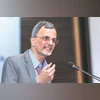
Chief Economic Advisor V Anantha Nageswaran
Listen to This Article
India’s market borrowing this financial year would remain unchanged, Chief Economic Advisor (CEA) V Anantha Nageswaran on Monday said. Speaking to CNBC TV-18, he said that the first-quarter growth momentum is likely to continue into July-September, with reforms in goods and services tax (GST) giving a boost to domestic demand .
The central government is planning to borrow ~14.82 trillion this financial year. Of that, it is scheduled to borrow ~6.8 trillion in October-March.
The Economic Survey has projected a growth rate in gross domestic product (GDP) between 6.3 per cent and 6.8 per cent in 2025-26 (FY26). “While I should actually be looking at revising my (GDP) numbers upward, given my cautious nature I am more comfortable now in saying that we will be tending towards the upper end of this range… When the second-quarter numbers come, we will revisit the estimates,” Nageswaran said.
GDP growth had accelerated to a five-quarter high of 7.8 per cent in April-June FY26.
Confident that the government would achieve the fiscal-deficit target of 4.4 per cent in FY26, Nageswaran said: “The second-quarter numbers are encouraging.”
Also Read

 "electricity, power sector")
 "V Anantha Nageswaran, Nageswaran, Anantha")
 "TCS")
 "V Anantha Nageswaran, Nageswaran, Anantha, Chief Economic Advisor")
Nageswaran said records showed a reduction in GST rates had not led to a decline in GST revenues. He also said that rising UPI (Unified Payments Interface) transactions were a good harbinger of a rise in GST revenues.
“Rate reductions have led to more formalisation rather than less formalisation, and that means more revenues,” he said.
Talking of private investment, the CEA said the three building blocks in capital formation — making investment easier to finance, providing the underlying demand conditions, and continuing to invest in ease of doing business — were in place. He, however, said growth in salaries and wages had trailed growth in profitability and this would become even more acute in the context of inroads to be made by artificial intelligence in job creation and job displacement.
Referring to Prime Minister (PM) Narendra Modi’s statement encouraging people to buy swadeshi products, the CEA said: “If it is manufactured here, then the PM calls it swadeshi, which I think is an important statement to understand, that it is not an anti-foreign investment position.”
More From This Section
 "GDP, Core sector")
 "Donald Trump, Trump")
 "public sector undertakings")
 "Pralhad Joshi, Pralhad")
 "Economy")
Topics : CEA India GDP growth economic growth
Don't miss the most important news and views of the day. Get them on our Telegram channel
First Published: Sep 22 2025 | 8:25 PM IST