


Centre waives Customs duty on charger parts and battery machinery
Duty exemptions on display assembly and wireless charging components, along with expanded relief for lithium-ion cell machinery, aim to boost domestic manufacturing and value addition
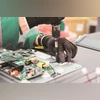 "Electronics")
Centre has also extended nil customs duty until March 31, 2029, on six components used in manufacturing inductor coil modules for wireless charging in cellular mobile phones
Listen to This Article
To boost domestic manufacturing, central government has exempted customs duty on parts going into display assemblies used in automotive, medical and industrial equipment, parts used in wireless charging modules of mobile phones and machinery used to produce lithium-ion cells, showed three official orders.
The orders issued late on Wednesday seek to support the domestic electronics industry with lower cost of production at a time the West Asia crisis has disrupted global supply chains and pushed up shipping costs.
A larger list of machinery used in lithium-ion cell manufacturing is now eligible for duty exemption without end use restrictions, replacing an earlier narrow list with restrictions.
The benefit of duty exemption is available till March 31, 2029.
Earlier, the applicable duty on these products ranged from 7.5-15 per cent.
Also Read

 "import, export, Customs")
 "printed circuit boards (PCBs)")
 "investment, funds, funding")
 "petrochemicals")
 "Sathya Agencies")
The move will benefit a wide range of sectors, including automotive, electric vehicles, medical devices and healthcare equipment, industrial electronics and manufacturing, mobile phones and smartphone manufacturing, consumer electronics, battery manufacturing, and energy storage systems.
The duty relief on display components and lithium-ion cell machinery is also expected to support the defence sector, particularly in the production of drones, robots, unmanned systems, and other advanced defence equipment that rely on high-quality displays and batteries.
One of the notifications exempted five components used in manufacturing display assemblies for automotive, medical and industrial applications from basic customs duty (BCD) till March 31, 2029.
These include cells, flexible printed circuit assemblies (FPCA), backlight units, frames and anisotropic conductive film (ACF).
“This measure is intended to provide impetus to manufacturing of display assemblies used in automotive, medical and industrial sectors. Similar displays for cellular mobile phones, wearable devices, televisions and interactive flat panel displays, already enjoy concessional rate of customs duty for their parts under their respective calibrated duty structures,” a person informed about the development said on condition of not being named.
Basic customs duty exemption on goods used in producing display assemblies, lithium-ion cell and inductor coil module will help to deepen the value chain of the domestic manufacturing ecosystem, electronics and information technology secretary S Krishnan said on Thursday.
"Based on industry representations, this is something that we had taken up with the Ministry of Finance. We are very happy that these notifications have been issued. This will really stimulate the electronics industry, especially the electronic component industry in the country," Krishnan said on the sidelines of the CII GCC Business Summit.
In a separate order, the government extended nil customs duty till March 31, 2029, on six components used in making inductor coil modules for wireless charging in cellular mobile phones.
This measure will further deepen the value addition in mobile phone manufacturing, the person quoted above added.
A third order replaced the existing list of machinery eligible for concessional customs duty for lithium-ion cell manufacturing with an expanded list of 85 capital goods.
The revised list includes coating machines, winding machines, welding systems, testing equipment, formation machines, drying systems and other specialized manufacturing equipment used across the lithium-ion cell production process.
According to Gautam Khattar, Principal at Price Waterhouse & Co LLP,while the immediate beneficiaries are manufacturers of mobile phone components, specialised display assemblies and lithium-ion cells, the broader objective is to develop a stronger domestic ecosystem for critical components, machinery and manufacturing capabilities.
"By extending these benefits until March 2029, the government aims to provide greater policy certainty, encourage fresh investments, improve supply-chain integration and support India's ambition of becoming a global manufacturing hub for both finished products and high-value components," Khattar said.
The move will also result in building the industry in these verticals like it has happened in mobiles and consumer electronics, said Pankaj Mohindroo, the chairman of electronics industry body India Cellular and Electronics Association.
“The exemption on important capital goods for lithium-ion industry across all segments including electric vehicles and battery storage systems will make the industry more competitive.The nation needs this industry to rapidly accelerate in manufacturing,” Mohindroo said.
Lower input cost due to the basic customs duty relief will also help improve the competitiveness of domestic manufacturers while encouraging greater localisation across the value chain, said Ashok Gupta, the chairman of original equipment manufacturer Optiemus Electronics.
“The measure complements existing initiatives aimed at building a robust manufacturing base and will help attract investments in component production. As India expands its role in global electronics supply chains, such policy interventions are critical to driving value addition, boosting exports and enhancing the country’s long-term manufacturing competitiveness,” Gupta said.
More From This Section

 "India US Trade Deal, import tariffs, US tariff hikes, Trade exports")
 "power sector, electricity, green energy, solar power")
 "gross domestic product, GDP Growth")
Don't miss the most important news and views of the day. Get them on our Telegram channel
First Published: Jul 09 2026 | 2:12 PM IST