


DESH Bill explained: What it is and why the government may junk it
Discussions are taking place on whether the DESH bill will be passed or the SEZ Act will be amended, officials said
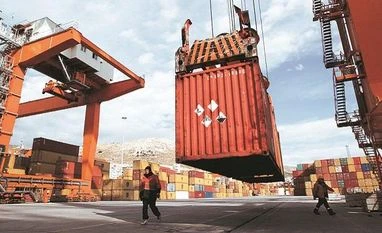 "Govt plans to remove minimum alternate tax on SEZs, boost exports")
Representative Image
Listen to This Article
In February 2022, the government of India announced that it would replace the Special Economic Zones (SEZ) Act, 2005, with the Development of Enterprise and Service Hubs (DESH) Act, to facilitate 'Make in India' and 'ease of doing business'. However, a report by the Economic Times (ET) says that the government could junk the proposed DESH Bill as it evaluates the need for new legislation to overhaul the country's SEZ.
Officials said that discussions are on to amend the extant SEZ Act instead of putting in place new legislation and that a decision on the issue is likely before the winter session of Parliament.
Let's take a look at what this bill is all about.
What is the DESH Bill?
The DESH Bill was introduced to overhaul the existing Special Economic Zone law of 2005, with the goal of reviving interest in SEZs and developing more inclusive economic hubs.
The new law will allow units to be produced both for domestic and international markets. Evaluation based on net foreign exchange and direct tax incentives has been done away with in order to comply with World Trade Organization (WTO) rules. According to the DESH Bill, net positive growth criteria will be used to judge performance.
Also Read

SEZs will be revamped and renamed as Development Hubs. They will be exempt from a number of laws that currently bind them. These hubs will facilitate both export-oriented and domestic investment.
According to reports, the government may impose an equalisation levy on goods or services supplied to the domestic market in order to bring taxes at par with those provided by units outside.
What were the shortcomings of the SEZ Act?
According to the World Trade Organization's dispute settlement panel, India's export-related schemes, including the SEZ Scheme, were inconsistent with WTO rules since they directly linked tax benefits to exports. The SEZ Act was implemented in 2006 in a bid to create export hubs and boost manufacturing in the country.
However, these zones began to lose their lustre following the imposition of a minimum alternate tax (MAT) and the introduction of a sunset clause for the removal of tax incentives.
The dispute settlement panel of Geneva-based WTO, in its report on October 31, 2019, ruled that India's export-related schemes (including SEZ Scheme) were in the nature of prohibited subsidies under the Agreement on Subsidies and Countervailing Measures and were inconsistent with WTO norms. India has appealed against this order.
What did the govt say about the DESH Bill?
Explaining the rationale behind the DESH Bill, commerce secretary BVR Subrahmanyam said in February 2022 that India needs large industrial manufacturing zones which have world-class infrastructure so that those places become manufacturing hubs of the future.
"We are in the process of drafting a SEZ 2.0…This new Act will lead to the revival of activities in SEZ areas. They will be manufacturing for both international and domestic markets," he was quoted as saying by news agency PTI.
Objections to DESH Bill
In December 2022, NITI Aayog raised objections to certain provisions of the proposed bill, such as partial de-notification of zones, and removal of the net foreign exchange (NFE) earning requirement.
"It would be difficult to give duty concessions with NFE requirements and in the absence of land contiguity, it would be difficult for customs to keep track of activities in the zone," sources told PTI.
Business Standard had earlier reported that the finance ministry had also objected to offering any tax concessions, fearing it could kick-start a debate about extending the incentive for companies outside SEZs.
The finance ministry was also against the clause allowing units to sell in the domestic market with duties to be paid only on imported raw materials and inputs instead of final products.
(With agency input)
More From This Section
Topics : SEZs SEZ Special Economic Zones BS Web Reports
Don't miss the most important news and views of the day. Get them on our Telegram channel
First Published: Nov 06 2023 | 1:09 PM IST