


Govt approves revised Rashtriya Gokul Mission with Rs 3,400 cr allocation
The revised RGM has been approved for the 15th Finance Commission cycle, with increased funds for the financial years 2025 and 2026
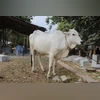 "Ongole cattle in India")
Ongole cattle | Photo: WIkimedia
Listen to This Article
The central government has approved the revised Rashtriya Gokul Mission with an additional Rs 1,000 crore, taking the total allocation to Rs 3,400 crore, according to a report by Moneycontrol.
This move aims to strengthen livestock development and increase farmers’ income through enhanced milk production.
Two new incentives have been added to the scheme. The first is a one-time assistance of 35 per cent of the capital cost for setting up Heifer Rearing Centres for 15,000 heifer cows across 30 housing facilities.
The second is a 3 per cent interest subsidy on loans taken by farmers to purchase high genetic merit (HGM) IVF heifers. The government believes this would help in the “systemic induction of high-yielding breeds.”
The revised Rashtriya Gokul Mission (RGM) has been approved for the 15th Finance Commission cycle, with increased funds for the financial years 2025 and 2026. The scheme will continue supporting key activities such as semen station strengthening, artificial insemination, bull production, breed improvement through sex-sorted semen, farmer training, and cattle breeding farms.
Also Read

 "Droupadi Murmu, Murmu, President")
 "The deal was signed on Monday in the presence of Union Minister for Home and Cooperation Amit Shah.")
 "Milk industry sounds the alarm as India's production growth sees steep fall")
 "milk factory amul mother dairy")
 "US flag, US, united states")
Significant growth in milk production
Over the past decade, India’s milk production has grown by 63.55 per cent, with per capita availability increasing from 307 grams per day in FY14 to 471 grams per day in FY24. Livestock productivity has also improved by 26.34 per cent in the same period.
The government emphasised the impact of RGM, saying, “The scheme is set to significantly boost milk production and productivity, ultimately increasing farmers’ incomes.”
It also supports indigenous bovine breeds through scientific bull production and genomic chip development. The use of In Vitro Fertilisation (IVF) has expanded under RGM, further enhancing cattle productivity.
With 8.5 crore dairy farmers dependent on the sector, the revised RGM is expected to play a crucial role in improving rural livelihoods and strengthening India’s dairy industry.
More From This Section
 "Sunil Barthwal, commerce secretary")
 "Bhajan Lal Sharma, Chief Minister, Rajasthan")
 "UPI")
 "Fitch Ratings")
Don't miss the most important news and views of the day. Get them on our Telegram channel
First Published: Mar 19 2025 | 5:48 PM IST