


RBI could rebuild reserves with dollar buys if rupee gains, says Citi
Although the RBI's reserves are at a record high, boosted by a historic rally in gold, it is carrying a $62 billion short forward book
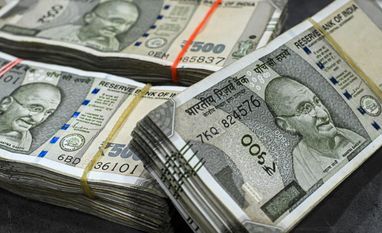 "rupee, Indian rupee, cash, money, economy")
The RBI may need to buy ₹3 trillion to ₹5 trillion of bonds next fiscal year to help bridge the supply-demand gap in government debt | Image: Bloomberg
Listen to This Article
By Bhaskar Dutta and Subhadip Sircar
India’s central bank is likely to start buying dollars to bolster its foreign-exchange reserves once the rupee strengthens to around 88—89 per dollar, according to Citigroup Inc.’s local markets head.
“In the short-term, we see the rupee in a band of 90 to 91.25 per dollar,” Aditya Bagree, head of markets for India and the subcontinent, said in an interview in Mumbai. The currency closed 0.1 per cent higher at 90.88 on Monday.
Although the RBI’s reserves are at a record high, boosted by a historic rally in gold, it is carrying a $62 billion short forward book. As those contracts mature, the central bank will need to deliver dollars to banks, potentially draining its stockpile of reserves.
The central bank sold dollars heavily in 2025 — a net $49.5 billion as per Nomura estimates — to support the rupee as it slid to record lows. Still, reserves have climbed to a record $725.7 billion, helped by a weaker greenback, a surge in gold and the RBI’s foreign-exchange swaps.
Also Read

 "Sanjay Malhotra, RBI, RBI Governor")
 "Sanjay Malhotra, Governor, Reserve Bank of India (RBI)")
 "Illustration: Ajaya Kumar Mohanty")
 "Sanjay Malhotra, RBI, RBI Governor")
The currency has trailed Asian peers in the past two weeks amid subdued foreign inflows, erasing part of its gains after the US cut tariffs on India earlier this month.
Seasonally, however, inflows tend to improve in February and March, Bagree said. That could offer a potential tailwind for the rupee.
Greater stability could channel more foreign flows into the nation’s bonds, which offer relatively attractive yields compared with regional peers, he said. The rupee was Asia’s worst performer in 2025, falling nearly 5 per cent amid high US tariffs and record equity outflows.
While the pressure has eased after the US trade deal, the bond market may feel the strain from a heavy supply of sovereign debt that could keep borrowing costs elevated, Bagree said.
“The gross supply expected next year is a worry,” he said, pegging total federal and state borrowing at close to ₹30 trillion ($330 billion).
As that supply hits the market in the financial year starting April, sovereign borrowing costs are likely to edge higher, Bagree said, forecasting the 10-year yield to trade in a 6.75 per cent—7.00 per cent range over the medium term. The benchmark yield closed at 6.70 per cent on Monday.
Recent tax changes and revised mandates for large investors like pension funds have curbed demand for long-tenor debt, widening the gap between short- and long-term yields, he said.
“The spread between the 2-year and 30-year bonds is around 160 basis points; the last time we had such a steep curve was during the pandemic,” Bagree said.
The RBI may need to buy ₹3 trillion to ₹5 trillion of bonds next fiscal year to help bridge the supply-demand gap in government debt.
More From This Section
 "EPFO, EPF subscribers, formal jobs, payroll data, labour market, March hiring, Labour Ministry, social security, youth employment, women workforce, net payroll additions")
 "K Rajaraman, chairman of the IFSCA")
 "Nirmala Sitharaman, Nirmala")
 "trade, import, export, container, shipping")
 "India-France, India France flag, India, France")
Topics : Reserve Bank of India RBI RBI Policy Citigroup Citi Bank
Don't miss the most important news and views of the day. Get them on our Telegram channel
First Published: Feb 24 2026 | 9:16 AM IST