


US resumes student visa but anti-American social media posts risk rejection
US resumes student visa processing, but applicants must now make all social media accounts public or risk rejection, as new vetting rules come into force
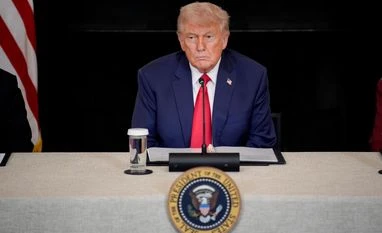 "US President Donald Trump")
US President Donald Trump | Image: Bloomberg
Listen to This Article
Good news for international students: The United States has resumed processing student visa applications. But there’s a new condition—applicants must now set all their social media accounts to “public” so consular officers can examine their online activity.
In a notice made public on June 18, 2025, the US State Department said it has lifted the freeze on student and exchange visitor visa appointments but warned that applicants who refuse to unlock their accounts may be turned away. Officers have been directed to scrutinise posts for anything that could be seen as hostile towards the US, its government, institutions or values.
“To facilitate this vetting,” the department said, “applicants will be asked to adjust the privacy settings on all their social media profiles to public. The enhanced social media vetting will ensure we are properly screening every single person attempting to visit our country.”
Applicants flagged for being private online
The State Department’s internal guidance now suggests that a refusal to share public accounts could signal an attempt to evade scrutiny. Officers have also been instructed to watch for activity that appears anti-American or disruptive to campus life.
Also Read

 "education, degree, visa")
 "Harvard University")
 "Indian student, america, US")
 "US Visa")
 "Harvard University")
The updated policy follows weeks of halted interview scheduling across embassies after Secretary of State Marco Rubio ordered a pause pending tighter vetting rules.
“If you apply for a visa to enter the United States and be a student, and you tell us that the reason you are coming to the United States is not just because you want to write op-eds, but because you want to participate in movements… we’re not going to give you a visa,” Rubio said in March, after a Turkish doctoral student at Tufts University was arrested and later released on bail.
Indian applicants may face tough choices
Experts say students from India and other countries will find little room to negotiate these new conditions. Any attempt to hide or edit past posts now could backfire.
“Visa applicants likely cannot do much to avoid refusal,” Daniel Pierce, partner at Fragomen’s Washington, DC office told Business Standard. “Setting accounts to private may cause the government to assume the applicant is hiding something. Deleting or editing posts at this stage could also raise concerns that the applicant previously shared problematic content.”
According to Pierce, even applicants who are not on social media might be viewed with suspicion. “A lack of social media presence might lead the government to assume the person is attempting to hide their views from scrutiny,” he said.
Few legal options if a visa is denied
For those rejected due to social media activity, legal remedies are limited. US courts generally do not interfere in visa decisions made by consular officers abroad.
“Challenging individual visa denials in federal court is extremely difficult,” said Pierce. “There may be ways to challenge the State Department at the policy level—for example, if its guidance to consular offices is flawed or if it exceeds constitutional free speech principles. But individuals who receive denials will likely have no direct legal remedy and will need to reapply and hope for a different outcome.”
Sofia Cope, staff attorney at the Electronic Frontier Foundation, had earlier criticised the direction the US was taking. “Penalising a would-be foreign student or visitor for not being active on social media or keeping their online presence shielded from the general public is an outrageous overreach by the administration,” she said.
More From This Section
 "US President Donald Trump")
 "Los Angeles Protest, Protest")
 "Germany")
 "Indian care workers set to join Japan's workforce under new training deal")
 "Red Palace, Saudi")
Don't miss the most important news and views of the day. Get them on our Telegram channel
First Published: Jun 19 2025 | 7:52 AM IST