


Delhi HC to hear petrol dealers' plea against ELV refuelling fines
Petrol dealers challenge Delhi govt directive penalising fuel supply to old vehicles, say enforcement is state's job and current tech lacks accuracy for compliance
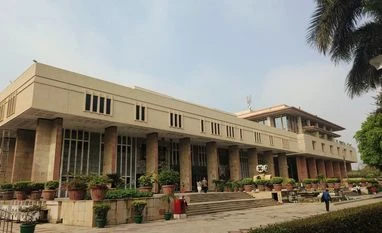 "Delhi High Court")
The association also stated that even state authorities have, in the past, struggled to enforce the rule preventing ELVs from entering Delhi or obtaining fuel (Photo: Twitter)
Listen to This Article
The Delhi High Court has agreed to hear a plea filed by the Delhi Petrol Dealers Association (DPDA) challenging the fines and legal action imposed on petrol pump owners for supplying fuel to vehicles classified as End of Life Vehicles (ELVs).
The court, while agreeing to hear the case on Wednesday, sought responses from the Delhi government and the Commission for Air Quality Management (CAQM). The matter will now be heard in September.
In its petition, the DPDA stated that the Delhi government’s directive—barring fuel stations from serving diesel vehicles older than 10 years and petrol vehicles older than 15 years—imposes “the responsibility of implementing the said rule without them being necessarily equipped or authorised under any law to carry out such responsibility”.
“By forcing such petrol pump owners to perform law enforcement duties, the impugned orders are undermining the Rule of Law, which dictates that it is the ultimate responsibility of the State to prevent any illegal activity, and that non-State actors cannot be allowed to take the place of law or the law-enforcing agency,” the association argued in its plea.
Also Read

 "Delhi High Court")
 "Parliament Security Breach")
 "Delhi High Court")
 "Amazon")
Effective July 1, the Delhi government implemented a complete halt on the refuelling of ELVs, aiming to curb vehicular pollution and phase out older, high-emission vehicles from city roads.
The association also stated that even state authorities have, in the past, struggled to enforce the rule preventing ELVs from entering Delhi or obtaining fuel.
Regarding the Automated Number Plate Recognition (ANPR) cameras—intended to detect ELVs in real time and trigger an audio message denying fuel—the DPDA said these systems “have not even been tested or tried, and the petrol pump owners are completely in the dark as to their efficiency and accuracy”.
“Further, in a situation where a petrol pump faces an average footfall of about 3,000 vehicles a day, purchasing fuel from multiple dispensing units simultaneously, the possibility of inadvertence due to such volume cannot be ruled out,” the association told the High Court.
It added that despite the possibility of such inadvertent breaches—or the inability of pump owners to comply fully with the directive—they are “being met with a disproportionate and unreasonable penalty of prosecution” by state government authorities.
More From This Section
 "The Swachh Bharat Mission (SBM), launched on the occasion of Mahatma Gandhi's birthday ten years ago, marks its 10th anniversary on Wednesday, providing a valuable opportunity to reflect on its achievements and challenges.")

 "labour Law, Labour Ministry, Contract labour laws, new labour codes")
 "MakeMyTrip")
 "Rajnath Singh, Defence Minister")
Don't miss the most important news and views of the day. Get them on our Telegram channel
First Published: Jul 02 2025 | 8:47 PM IST