


No fuel in Delhi for old vehicles registered anywhere in India from July 1
The Commission for Air Quality Management has formulated the plan to close the loophole Delhi residents use by registering their overage vehicles in other states
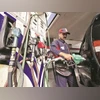 "petrol pump, fuel")
In Delhi, 500 out of 520 fuel stations have installed Automated Number Plate Recognition cameras
Listen to This Article
Starting July 1, no end-of-life (EOL) vehicles—diesel vehicles older than 10 years and petrol vehicles older than 15 years—will be allowed to fill their tanks at Delhi fuel stations, irrespective of the states they are registered in, the Commission for Air Quality Management (CAQM) clarified on June 21.
The statutory body had issued directions to fuel stations in April, stating that no overage vehicle should be given fuel from July 1. On Friday, it confirmed that these restrictions would apply to vehicles registered nationwide.
The CAQM has taken the measure to close a loophole used by Delhi residents who register their overage vehicles in other states.
“Our directions do not say that only EOL vehicles registered in Delhi will be detected and denied fuel. Vehicles registered outside Delhi-NCR also ply on Delhi roads and contribute to pollution. If (Delhi) people register their vehicles outside… that has to be deterred. We know that this is happening,” said Virendra Sharma, Member (Technical), CAQM.
Delhi’s air pollution woes
Also Read

 "salary, employee")
 "Ashok Leyland, commercial vehicle")
 "IT companies, BPOs set target of 100% electric vehicle cab fleet by 2030")
 "HD Kumaraswamy")
 "two wheeler")
Delhi and its satellite cities are grappling with rising air pollution, particularly in winter. Air quality index (AQI) levels often cross into the ‘severe’ or ‘severe-plus’ categories, posing health risks, especially to children and senior citizens.
A survey conducted last year found that 75 per cent of families in Delhi-NCR have at least one member experiencing a sore throat or persistent cough. Half of the respondents reported family members suffering from asthma or breathing difficulties due to the toxic air.
VAHAN-linked cameras to detect violators
In Delhi, 500 out of 520 fuel stations have installed Automated Number Plate Recognition (ANPR) cameras, which provide information such as the age and registration details of vehicles. The remaining stations will be equipped with the technology by June 30.
The ANPR cameras, linked to the VAHAN database, will detect the age of vehicles and identify those without valid pollution certificates. Alerts will be sent to the command centre and enforcement teams comprising traffic and transport department officials, who will impound offending vehicles.
Satellite cities to be included later
The fuel ban will be extended to five high-vehicle-density districts adjoining Delhi—Gurugram, Faridabad, Ghaziabad, Gautam Budh Nagar (Noida), and Sonipat—starting November 1, after the installation of ANPR cameras is completed by October 31.
For the remaining districts of the National Capital Region (NCR), the fuel denial policy will begin from April 1, 2026, by which time they must also install ANPR cameras.
Commercial buses not exempt
EOL buses—both private and state-owned—registered anywhere in India will also be detected by the ANPR cameras. However, separate directions will be issued to curb their movement in Delhi-NCR, Sharma said.
He added that 100 enforcement teams comprising officials from traffic and transport departments have been deployed.
Strict action will be taken against fuel stations found violating the directions under relevant provisions of law, he said.
The CAQM noted that there are 62 lakh EOL vehicles in Delhi, of which 41 lakh are two-wheelers. In the entire NCR, the number stands at roughly 44 lakh, primarily concentrated in the five high-density cities.
Sharma also said fuel stations must refuse to refuel such vehicles from the specified dates and that authorities must initiate legal action, including impounding and scrapping, under the Registered Vehicle Scrapping Facility (RVSF) Rules. There is also an option to obtain a no-objection certificate (NOC) to move overage vehicles outside Delhi for use elsewhere.
Traffic surveillance systems and Integrated Command and Control Centres will be used to detect and act against these vehicles on roads.
The directions come amid poor progress in removing EOL polluting vehicles from the NCR, despite previous orders from the Supreme Court and the National Green Tribunal.
(With inputs from PTI)
More From This Section
 "Enforcement Directorate")
 "Yoga, Yog")
 "e-rickshaw,e rickshaw, electric rickshaw")
 "Modi, Narendra Modi, N Chandrababu Naidu, Naidu")
Topics : Auto industry Fuel Car scrapping Air quality
Don't miss the most important news and views of the day. Get them on our Telegram channel
First Published: Jun 20 2025 | 9:16 PM IST