


Odisha introduces SEBC quota, hikes ST, SC reservation in courses
State revises reservation policy for higher education, introducing SEBC quota and raising ST and SC share across medical, engineering and other professional courses
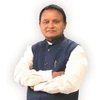 "Mohan Charan Majhi")
Mohan Charan Majhi
Listen to This Article
The Odisha Cabinet, chaired by Chief Minister Mohan Charan Majhi, has approved a significant revision of reservation norms for admissions into medical, engineering and other professional courses in the state’s higher educational institutions.
The Cabinet cleared a proposal from the ST and SC Development, Minorities and Backward Classes Welfare Department to introduce a new quota for Socially and Educationally Backward Classes (SEBC), while substantially enhancing reservation quotas for Scheduled Tribe (ST) and Scheduled Caste (SC) students.
As per the revised policy, ST reservation will increase from 12 per cent to 22.5 per cent, while SC reservation will rise from 8 per cent to 16.25 per cent. Additionally, an 11.25 per cent reservation has been introduced for SEBC students, marking their formal inclusion in the state’s higher and technical education admission framework.
The new reservation structure will be implemented across all state universities, their affiliated colleges and technical institutions, including ITIs and polytechnics. It will cover a wide spectrum of disciplines such as engineering, technology, management, computer applications, medicine, surgery, dental sciences, nursing, pharmacy, allied health sciences, veterinary science, Ayurveda, homoeopathy, agriculture, architecture, planning, cinematic arts and other notified courses at both undergraduate and postgraduate levels.
The chief minister said the state government is committed to ensuring equitable access to higher education for all sections of society, particularly those who have remained historically underrepresented. The revised reservation policy has been designed in line with the state’s social composition and aims to ensure that the benefits of growth and development reach every section of society, he said.
Also Read

 "Odisha Chief Minister Mohan Charan Majhi chaired the state cabinet")
 "LPG, LPG cylinders, cylinder, cylinders, LPG Crisis")
 "Odisha Mining Corporation")
 "agroforestry, forest, agriculture (Photo: Pexels)")
 "Inside Hari Plast, a plastic pipes and fittings manufacturing unit, long extrusion lines that once ran continuously now stand cold. (Photo: Hemant Kumar Rout)")
“The enhancement of reservation for STs and SCs, along with the introduction of a dedicated quota for SEBC students, is a transformative step towards social justice. This will empower lakhs of students from marginalised communities to pursue professional education and build a better future,” Majhi told mediapersons.
Data from the state government indicates a sharp rise in reserved seats following the Cabinet’s approval. In the medical stream, which includes both undergraduate (UG) and postgraduate (PG) courses, the total number of seats stands at 2,421, including 1,800 UG and 621 PG seats.
Earlier, there was no reservation for SEBC, while ST and SC reservations stood at 290 (UG-216, PG-74) and 193 (UG-144, PG-49) seats, respectively. After the revision, ST seats will increase to 544, SC seats to 392, and SEBC will get 271 seats, bringing the total reserved seats for these three categories to 1,207, nearly half of the total intake.
A closer look at the break-up shows that in UG medical courses (1,800 seats), ST reservation will increase from 216 to 405 seats, SC from 144 to 292, and SEBC will get 202 seats. In PG courses (621 seats), ST seats will rise from 74 to 139, SC from 49 to 100, and SEBC will get 69 seats. This marks a substantial redistribution compared to the pre-revision structure, where SEBC had no dedicated quota.
The impact is even more pronounced in engineering education. Of a total of 44,579 engineering seats in Odisha, the number of seats reserved for ST students will increase from 5,349 to 10,030, while SC seats will rise from 3,566 to 7,244. SEBC students, who previously had no reservation, will now be allocated 5,015 seats. Overall, the total reserved seats for ST, SC and SEBC in engineering will jump from 8,915 before Cabinet approval to 22,289 after the revision, more than doubling the earlier figure.
Officials said the move is aimed at ensuring equitable access to higher education in line with the state’s demographic composition. The inclusion of SEBCs, in particular, is expected to widen the social base of beneficiaries in technical and professional courses. The decision is also likely to have significant academic and administrative implications, as institutions will need to recalibrate seat matrices and admission processes in accordance with the revised quotas.
“The government has turned its focus to creating equal opportunities in education. We are laying the foundation for a more inclusive and progressive Odisha by expanding access in critical fields like medicine, engineering and technical education,” Majhi added.
More From This Section
 "Justice B V Nagarathna")
 "Air India crashed plane")
 "Indian Railways")
 "LPG, LPG cylinders, cylinder, cylinders, LPG Crisis")
 "Surya Kant")
Topics : Odisha Reservation policy Medical seats
Don't miss the most important news and views of the day. Get them on our Telegram channel
First Published: Apr 05 2026 | 11:32 PM IST