


Supreme Court calls for penal action against farmers for stubble burning
CJI says jailing violators could deter stubble burning, a key cause of winter smog
 "Supreme Court, SC")
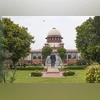
The CJI clarified that the court was not recommending mass arrests but selective prosecutions to act as a deterrent. (Photo: PTI)
Listen to This Article
The Supreme Court on Wednesday recommended “selective arrests” of a few farmers involved in stubble burning, saying that it would send across the right message and help curb the menace of winter pollution in the National Capital Region (NCR).
Stressing that the stubble burning practice is a major contributor to Delhi-NCR’s hazardous air quality in winter, a bench led by Chief Justice of India (CJI) Justice BR Gavai, along with Justice K Vinod Chandran, raised the issue while hearing a suo-motu case relating to filling up vacancies in the state pollution control boards of Uttar Pradesh, Haryana, Rajasthan and Punjab.
The court asked if there were provisions to criminalise crop residue burning.
On this, Additional Solicitor General Aishwarya Bhati, appearing for the Centre, told the Bench that the Commission for Air Quality Management (CAQM) Act prescribes penalties against officers who fail to enforce norms. But there was no such provision for individual farmers.
When asked under which law the practice of stubble burning is prohibited, the Bench was told that it was the Environment Protection Act (EPA). The court, however, noted that the criminal prosecution provisions under the law have been withdrawn.
Also Read

 "Supreme Court")
 "Stubble Burning, Stubble")
 "Supreme Court, SC")
 "Supreme Court, SC")
The CJI said that prosecuting only officers would be insufficient.
“It is difficult for an official to monitor so many villages. If some agriculturists are found violating the law, at least a few should be sent behind bars. It will send the right message,” CJI Gavai said, urging the Centre to consider extending penal provisions to cultivators.
Bhati, in response, told the apex court that prosecutions had earlier been withdrawn as a matter of national policy, considering the social sensitivity around farmers.
The CJI, however, cautioned against a blanket exemption.
“Farmers hold a special place in our hearts. Because of their effort we eat. But that does not mean they should escape responsibility when the environment of the country is at stake,” he said.
He warned that if the government does not decide on the issue with stakeholders, the court may issue a mandamus. A mandamus is an order to an authority to perform a public or statutory duty.
The bench also referred to reports indicating that crop stubble could be repurposed as biofuel, reducing the need for burning.
During the hearing, Senior Advocate Rahul Mehra, appearing for the Punjab government, opposed criminalising small cultivators, arguing that it would devastate their families.
Mehra said the state uses a “red entry” system under which defaulting farmers lose access to grain markets and online portals, a deterrent more effective than jail terms.
“Most farmers are hand-to-mouth. If you jail a farmer with one hectare of land, five dependents also suffer. For large farmers, stricter measures may be needed, but prosecuting small ones is counterproductive,” Mehra argued before the court.
The CJI clarified that the court was not recommending mass arrests but selective prosecutions to act as a deterrent.
Meanwhile, Amicus Curiae Aparajita Singh told the bench that farmers delay sowing paddy in summer to conserve groundwater. This reduces the harvesting window to two months, leaving farmers with little time to prepare fields for the next crop, forcing them to burn stubble to meet deadlines, Singh said.
The hearing was adjourned after the ASG sought time to place status reports on record.
More From This Section
 "Goods and Services Tax, GST")
 "Indian Flag, India")
 "Modi, Narendra Modi")
 "National highway")
 "SBI, State bank of India")
Don't miss the most important news and views of the day. Get them on our Telegram channel
First Published: Sep 17 2025 | 8:00 PM IST