


India's e-bus sales likely to grow 3.6-fold in FY27, projects CareEdge
In India, the e-bus sector is still in its early stage, representing just 4 per cent of total annual bus registrations in FY24
 "With the launch of the ~10,900 crore PM Electric Drive Revolution in Innovative Vehicle Enhancement (PM E-DRIVE) and the ~3,435.33 crore PM-eBus Sewa-Payment Security Mechanism (PSM) scheme, the industry is optimistic that these initiatives will sign")
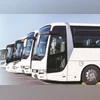
Representative Picture
Listen to This Article
Sales of electric buses (e-buses) in India are expected to grow 3.6-fold in the financial year 2026-27 (FY27), reaching more than 17,000 units compared to 3,644 units sold in FY24, a report said.
According to the report published by rating agency CareEdge, the likely exponential sales growth is attributed to cost reductions, better charging infrastructure, and supportive government policies.
In India, the e-bus sector is still in its early stage, representing just 4 per cent of total annual bus registrations in FY24. However, there was an impressive growth of nearly 81 per cent on a year-on-year basis, albeit on a low base, attributed to government incentives under various schemes, support for infrastructure development, and favourable contracting terms offered under the gross cost contract (GCC) model, the report said.
“As the sales volume of e-buses is envisaged to reach more than 17,000 units in FY27, penetration rates will reach around 15 per cent,” said Arti Roy, associate director at CareEdge Ratings.
Additionally, the transition to cleaner fuels has decreased conventional diesel and petrol buses' market share to 90 per cent in FY24 from 97-98 per cent a decade ago.
Also Read

 "JSW Group")
 "Pankaj Kumar Singh, Pankaj Kumar")
 "electric buses, Mytrah Mobility")
 "JBM Auto")
 "With the launch of the ~10,900 crore PM Electric Drive Revolution in Innovative Vehicle Enhancement (PM E-DRIVE) and the ~3,435.33 crore PM-eBus Sewa-Payment Security Mechanism (PSM) scheme, the industry is optimistic that these initiatives will sign")
India has untapped potential for e-buses due to rising demand for sustainable public transport. Faced with air pollution and traffic congestion, e-buses offer a way to reduce emissions, with the government introducing initiatives like the Faster Adoption and Manufacturing of Hybrid and Electric Vehicles (FAME) schemes and PM e-Bus Sewa for quicker adoption of e-buses, the report said.
Currently, e-bus adoption is limited to a few states and cities, but widespread adoption is expected to drive exponential sales growth in the medium term, according to the report.
As of the 2024 calendar year (CY24), Maharashtra leads in electric bus registrations with 2,423, followed by Delhi at 2,361, and Karnataka at 1,473. More state transport undertakings (STUs) are now issuing tenders for e-buses under the GCC model, increasing e-bus penetration nationwide.
Until a few years ago, STUs in the country followed an outright purchase mode for buses and operated them independently. However, over the last few years, the GCC model has successfully emerged, largely replacing the outright purchase model, especially in larger cities, as it is an asset-light model for STUs with no obligation to operate and maintain buses. Additionally, the per-kilometre cost of running an e-bus is reasonably lower than that of a diesel bus.
However, for e-bus operators, the inherently weak credit profile of STUs across the country remains a significant concern, though this is expected to be addressed with the implementation of a properly managed payment security mechanism, the report said.
The country holds significant potential for e-buses, with only six e-buses per million people compared to the world average of 85.
The Indian e-bus industry is dominated by a few players, including Tata Motors, Olectra, JBM, PMI, and Switch Mobility, which held 88 per cent of the market share in FY24. These companies collectively can manufacture 40,500 e-buses annually. Demand growth is further supported by a robust order book among industry players. These companies had an order book of approximately 20,000 electric buses as of September 30, 2024, set to be delivered within the next one to two years.
The total cost of ownership (TCO) for e-buses compared to diesel buses is crucial to the transition to sustainable public transportation. TCO encompasses all costs associated with owning and operating a bus over its lifetime, including the purchase price, fuel or electricity costs, maintenance, and operational expenses.
As battery prices continue to decrease and charging infrastructure improves, the gap in TCO between electric and diesel buses will narrow, making electric buses an increasingly attractive choice for cities and public transport operators, the report further said.
TCO for air-conditioned (AC) e-buses is nearly 15-20 per cent lower than that of AC diesel buses over a 12-year period, making it an attractive proposition. Apart from this cost differential, electric buses help significantly reduce air pollution, which is a pressing need of the hour.
“E-bus adoption in the country so far has been largely limited to STUs and intra-city transportation. However, with TCO clearly in favour of e-buses, private bus operators are also expected to opt for e-buses, which would significantly fast-track e-bus adoption in the country,” said Hardik Shah, director at CareEdge Ratings.
E-bus penetration in inter-city transportation, which has huge potential, would require improved charging infrastructure with fast-charging facilities. Furthermore, the GCC model has excellent prospects, but lingering concerns of bus operators regarding timely payments by STUs need to be properly addressed through an adequate payment security mechanism. Lastly, the ability of original equipment manufacturers (OEMs) to bid for many e-bus tenders would be limited, as it is an asset-heavy business model for them. Consequently, the emergence of innovative business models is expected shortly, which could sustain improvements in the share of e-buses in the country,” Shah added.
More From This Section
 "Auto major Mahindra and Mahindra (M&M) is eyeing to capture the under 3.5-tonne small commercial vehicle (SCV) market with the launch of Veero, developed on its urban prosper platform (UPP), that will sport multi-fuel options, including diesel, compr")
 "EV, ELECTRIC VEHICLE")
 "In growth lane: Exports of passenger vehicles, 2-wheelers surge in 2024")
 "AUTOMOTIVE")
 "Ashwini Vaishnaw, Ashwini, Vaishnaw")
Topics : electric buses Electric Vehicles Auto sales
Don't miss the most important news and views of the day. Get them on our Telegram channel
First Published: Mar 11 2025 | 5:03 PM IST