


AI infra must be resilient, self-regulated to manage risks: Trai chief
The Trai chief highlighted that under the India AI Mission, the government is facilitating affordable access to over 38,000 GPUs, plus a secure 3,000-GPU cluster for strategic use
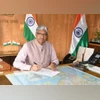 "Anil Kumar Lahoti")
Anil Kumar Lahoti. (File Photo)
Listen to This Article
Trai Chairperson Anil Kumar Lahoti on Monday pitched for resilient AI infrastructure and strong self-regulation to proactively mitigate risks and ensure that systems remain secure, accountable and adaptable to disruptions.
Addressing a Nasscom pre-summit event for the upcoming AI Impact Summit, Lahoti said the design and rollout of AI infrastructure will decide if the technology's advantages stay limited to a few or get distributed broadly across regions and sectors.
"...another important facet is maintaining resiliency within AI infrastructure, this involves establishing safeguards and frameworks that ensure AI systems remain capable of adapting to disruptions and are also reliable, secure and accountable while continuing to serve public and economic objectives...from a regulatory perspective, robust self-regulation is important in this sector as it will enable the industry to proactively address the risks of AI through voluntary commitments and self-certification," Lahoti said.
Pointing to projections by the International Energy Agency, he said India's total energy demand is projected to grow by about 3 per cent annually till 2035, and underlined the critical need to optimise AI energy demands while boosting digital growth.
He noted that global AI energy consumption is set to more than double by 2030 to around 945 TWh.
Also Read

 "artificial intelligence, AI Models")
 "Sundararaman Ramamurthy, managing director & chief executive officer of BSE Limited")
 "US tariffs, Trump tariffs")
 "google, google logo")
 "Ashwini Vaishnaw, Union Minister for Electronics and Information Technology")
The Trai chief highlighted that under the India AI Mission, the government is facilitating affordable access to over 38,000 GPUs, plus a secure 3,000-GPU cluster for strategic use.
With India well-placed to capture 10 to 15 per cent of the estimated $ 17-26 trillion market, AI is expected to add to the global economy over the next decade. Lahoti described AI infrastructure as a strategic national asset.
"AI infrastructure is a strategic national asset in a sense because access to these foundational resources has become a key for innovation, economic competitiveness and state capacity, and these are significant for India's transformation to a knowledge economy. It is well known that quality AI infrastructure remains globally concentrated among a few countries, firms and urban hubs, and this needs to be addressed," he said.
AI and the telecom sector are merging to form the backbone of the digital economy, with telecom networks acting as primary carriers for AI, while the technology provides the smart layer for telecom operations. This positions telecom networks at the heart of India's AI ecosystem, Lahoti said.
He cited the scale of the current AI deployment, where one service provider has already tagged over 48 billion calls and 250 million SMS as spam, while blocking nearly 3.2 lakh fraudulent URLs.
"It is clear that as India advances towards the adoption of AI, the way AI infrastructure is designed, governed and deployed will determine whether the benefits of artificial intelligence remain concentrated or are widely shared across regions, sectors and institutions. Together, accessibility, resiliency and efficiency must form the core principles of India's AI infrastructure strategy," Lahoti said.
The India-AI Impact Summit 2026, announced by Prime Minister Narendra Modi at the France AI Action Summit and scheduled for February 1920 in New Delhi, will be the first-ever global AI summit hosted in the Global South.
(Only the headline and picture of this report may have been reworked by the Business Standard staff; the rest of the content is auto-generated from a syndicated feed.)
More From This Section
 "Jharia Coalfield fires")
 "Prime Minister Narendra Modi and German Chancellor Friedrich Merz")
 "H D Kumaraswamy")
 "mobile phone parts, parts")
 "branded residence, housing, real estate")
Don't miss the most important news and views of the day. Get them on our Telegram channel
First Published: Jan 12 2026 | 8:29 PM IST