


Govt to make carbon trading compliance mandatory for steel sector
A senior steel ministry official says mandatory compliance under the Carbon Credit Trading Scheme will begin soon, as India moves to lower emissions and set plant-specific targets
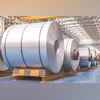 "steelmakers, steel")
premium
3 min read Last Updated : Mar 03 2026 | 8:27 PM IST


Listen to This Article
The government is set to make compliance under the Carbon Credit Trading Scheme (CCTS) mandatory for the steel sector, a senior steel ministry official said.
The move is part of a broader push to adopt cleaner technologies and accelerate decarbonisation.
“We are going to start CCTS very soon. I cannot give a date. I am talking about making it mandatory for the steel sector,” the official said, requesting anonymity.
He added that the government had conducted a baseline survey covering around 70 steel units to assess current emission levels. However, discrepancies were found in the initial survey, and parts of the data are now being reverified.
Carbon credit trading is a market-based mechanism in which companies buy and sell credits that permit a specified amount of greenhouse gas emissions. One credit typically represents 1 tonne of carbon dioxide (CO2) removed or avoided. Companies that emit less than their allocated limit can sell surplus credits, while those exceeding their limits must purchase credits, thereby creating a financial incentive to reduce emissions.
The CCTS, introduced under the Energy Conservation (Amendment) Act, 2022, provides for the establishment of a domestic carbon market in India. The government notified the scheme’s framework in 2023.
The steel sector is among India’s most energy-intensive industries and plays a major role in the country’s industrial emissions profile, making it central to India’s broader decarbonisation strategy. According to the steel ministry, the global average emissions intensity of steel production is about 1.91 tonnes of CO2 per tonne of crude steel, compared with 2.54 tonnes in India.
The Bureau of Energy Efficiency (BEE) is developing emissions intensity targets for obligated entities under the Indian Carbon Market framework through the CCTS. Under the proposed trajectory, the average emissions intensity of steel production is expected to decline from 2.54 tonnes of CO2 per tonne of crude steel in 2023-24 to 2.2 tonnes by 2029-30.
Under the proposed framework, emission reduction targets are likely to be defined at the level of specific plant categories, such as blast furnace-based units and electric arc furnaces, rather than applying a single benchmark across the sector. For implementation, the government is considering setting emissions intensity benchmarks and requiring plants to reduce their levels to prescribed targets within a defined timeframe.
“For example, if a company’s current carbon emission is 2.6 tonnes of CO2 per tonne of steel produced, it will have to reduce it to 2.3. The company will not get any incentive until it reaches 2.3,” the official said, illustrating how performance thresholds could operate.
The scheme is also expected to differentiate between production technologies, with varying emission standards depending on the route adopted. “Green steel is a very general term. We will have to micro it,” the official said, indicating that detailed, plant-specific standards are being designed.
The move aligns with India’s commitment to achieve net-zero emissions by 2070. However, a formal rollout timeline has not yet been specified, as consultations and data verification continue before final implementation is finalised.
Topics : Carbon emissions Steel sector Steel Industry